The most important questions to ask a TV and film caterer are whether they’re fully self-sufficient, how many people they can feed in a single meal window, what compliance paperwork they provide and how they cope when the call sheet changes. Clear answers to those four will quickly separate production-ready caterers from general event vendors.
Catering is one of the few departments that touches everyone on a shoot, every day. Get it wrong and you feel it in morale, in overrun breaks and in calls from the location manager. If you’re comparing providers for TV & Film catering, the questions below are the ones worth asking before anything is signed.
How do you choose a film caterer?
Choose a caterer who already understands how productions run, not just how to cook for a crowd. Feeding a wedding and feeding a unit base on location are very different jobs. On a shoot, the schedule is fixed by the call sheet, break windows are tight, locations move and the people eating are often tired, cold and on their feet.
Start by asking what kinds of production they’ve worked on and at what scale. Then ask how they would approach your specific shoot: the number of days, the locations, the call times and the size of the unit. A caterer who comes back with practical questions of their own is usually a good sign. One who quotes straight away without asking about access or timings probably hasn’t thought it through.
Do film caterers need their own power and water?
Yes. A location caterer should bring their own power and water so they can operate anywhere the production goes, without relying on the location or taking capacity from the unit’s own supply.
Plenty of locations have neither. Fields, forestry tracks, industrial estates out of hours and closed roads rarely offer a convenient socket or tap. Even where power is available, the production may need all of it. A caterer who needs hooking up becomes another problem for the locations team to solve.
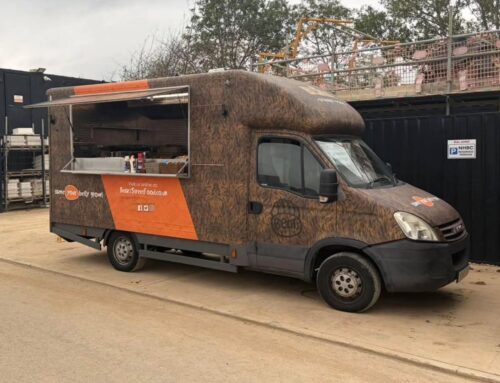
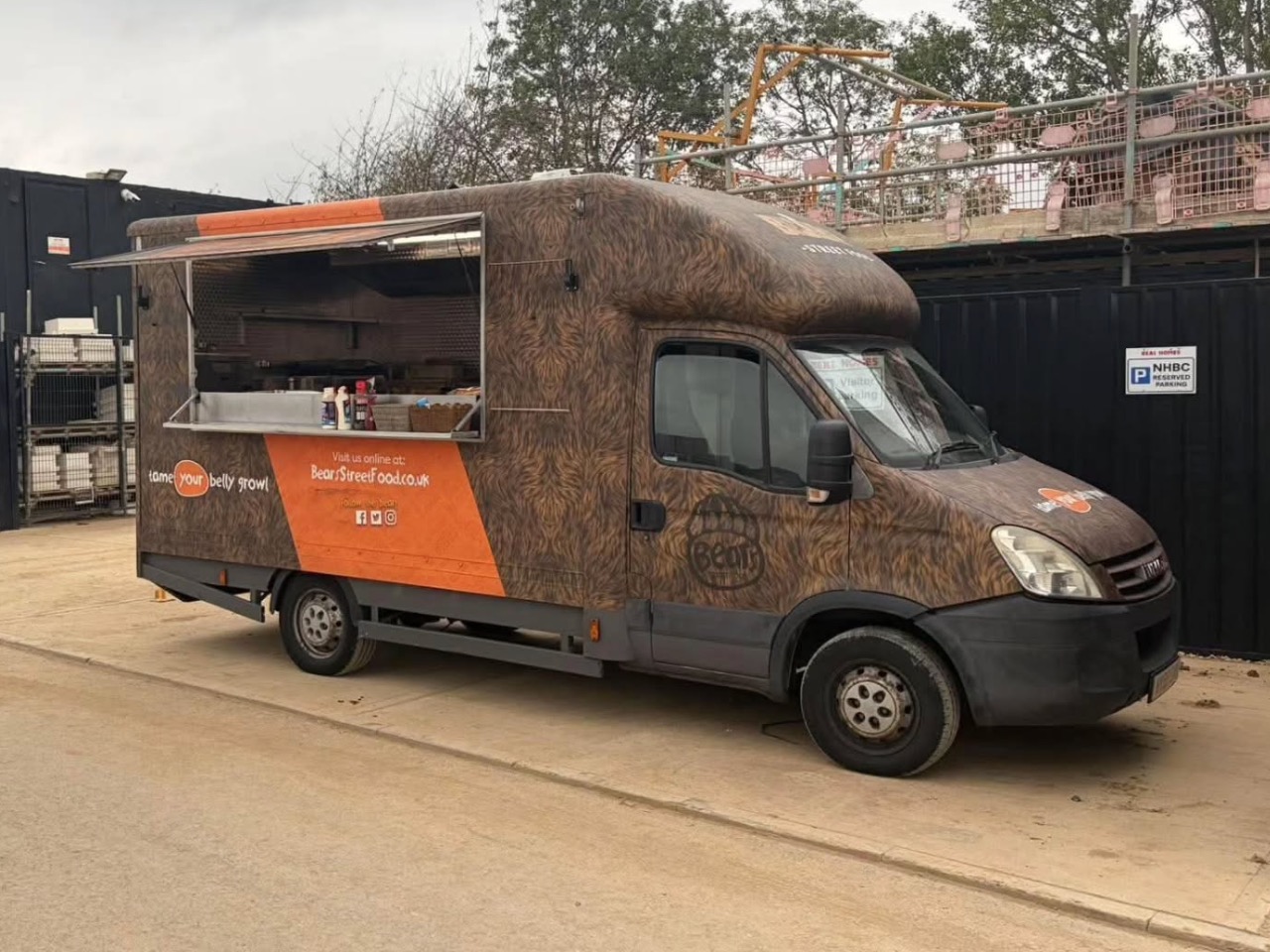
Noise is the other half of the question. A loud generator near set is a sound department’s nightmare. Bear’s units run on silent power and carry their own fresh water, which means they can be positioned where the crew need them rather than wherever the noise is least disruptive. Where the unit actually parks still needs planning, and we cover access and ground conditions in parking the unit base on autumn locations.
How many crew can a location caterer feed at once?
Ask about capacity per meal window, not per day. Feeding 300 people across a whole day is easy. Feeding 300 people within a 30-minute lunch break, so the first unit is back on set on time, is the real test.
Find out how the caterer handles peaks: how many serving points they run, how quickly each one turns people round, and whether they can add a second unit for crowd days or large scenes. Bear’s comfortably serves from several hundred to over a thousand people per meal window, using high-capacity equipment set up specifically to keep break times on schedule.
What paperwork should a film set caterer provide?
At a minimum, expect a risk assessment and method statement (RAMS), proof of public liability insurance and a current food hygiene rating. Your location manager will usually need the RAMS before the caterer is allowed on site, so it should arrive promptly and without chasing. We cover what a good one contains in what location managers want in a caterer’s RAMS and compliance pack.
Insurance levels vary by production and location. Check what your production’s insurers and location agreements require, then confirm the caterer’s cover meets it. Don’t assume.
The hygiene rating is worth looking up yourself on the Food Standards Agency website. Bear’s holds five-star hygiene ratings, and a caterer who’s confident in theirs will be happy for you to check. You should also ask how allergen information is recorded and shared, because on a large crew someone will always need it.
How does a caterer handle changes to the call sheet?
A good production caterer plans for change rather than treating it as an exception. Schedules shift for weather, light, talent availability and a dozen other reasons. Breakfast moves earlier, lunch moves later, a day turns into a night shoot or a scene runs long. (For how meals are usually scheduled across a shooting day, see how many meals a day a film crew needs.)
Ask directly how much notice they need for a change of service time and what happens if the change comes on the day. Ask whether they can cover early starts, split days and nights, and how they keep food hot and fresh if a break is pushed back by an hour.
Bear’s runs a 24/7 service and aligns service times to your call sheet, including early breakfasts, night shoots and split shifts. That flexibility matters more than any single menu item when the schedule is under pressure.
Can a location caterer handle dietary requirements at volume?
They should, and you’ll want to know how. Every crew includes vegans, vegetarians, people with allergies and people with religious dietary needs. Ask whether these options are built into the main menu or prepared as one-off extras, and how they’re labelled and kept separate at the hatch. Our guide to managing crew dietary requirements on set goes into more detail.
Bear’s menus include vegan, gluten-free and halal options as part of the standard service, so dietary needs don’t slow the queue or leave anyone with a lesser meal.
What should a film catering quote include?
A clear quote should show what’s being provided for each day: the number of services (breakfast, lunch, second meal and so on), approximate headcounts, the menu or menu approach, and any travel or set-up between locations. If anything is excluded, it should say so.
The cost itself will depend on several factors. Crew size and the number of services per day have the biggest effect. Shoot length matters, as does the number of unit moves, how remote the locations are and how varied the menu needs to be. When comparing quotes, line them up on the same basis. Two caterers can look very different on paper simply because one has included services the other has left out.
On longer productions, it’s also worth asking whether the caterer can commit to the whole shoot. A single partner for the full schedule means consistent food, one set of paperwork and a team who know the crew, which makes the budget far easier to forecast. We look at this in more detail in predictable catering costs on long-running productions.
How much notice does a film caterer need?
As much as you can give, though a capable caterer should also be able to respond quickly. Early booking secures availability, especially in busy periods, and gives time to agree menus, access and paperwork.
Short-notice work is part of the industry, though. Commercials, pick-up days and reshoots often come together in days rather than weeks. Ask how quickly the caterer can confirm and mobilise. Bear’s fleet can be deployed to remote rural locations, tight urban streets or studio backlots at minimal notice.
The questions in brief
If you only have five minutes on the phone, these are the ones to get through:
- Are you fully self-sufficient for power and water, and is your power silent?
- How many people can you serve in a single meal window?
- Can you send RAMS, insurance details and your hygiene rating before we confirm?
- How do you handle changes to service times, early calls and night shoots?
- How are dietary requirements and allergens handled at the hatch?
- What exactly is included in your quote for each shooting day?
- How quickly can you mobilise if dates change?
Talk to us about your production
If you’re putting together catering for a shoot, we’re happy to answer every one of these questions for your schedule and locations.
Contact Bear’s Street Food with your dates, locations and approximate crew size, and we’ll come back with a plan built around your call sheet.