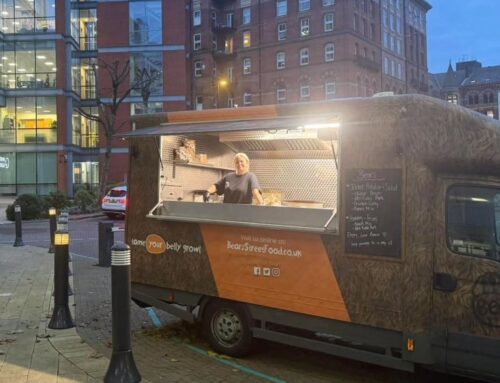
Regular office catering helps in January because it gives people a concrete reason to come in during the coldest, quietest weeks of the year. A recurring hot lunch on a set day takes little organising once it’s running, and it turns an ordinary Wednesday into something staff look forward to.
This post is for office and HR managers looking for practical ways to keep teams engaged after the Christmas break. Bear’s office catering service is designed for recurring team lunches and one-off events, and the points below apply to whichever format you choose.
Why is January a hard month for staff morale?
January combines short days, cold weather and the anticlimax after Christmas, with many people coming back to full inboxes. For hybrid teams, staying at home becomes more tempting just when the office could most use the energy of people being together.
Managers often notice it first in quieter desks and shorter conversations, rather than in anything people say outright. None of this needs a dramatic fix. Small, regular moments that make the working day better tend to do more than a single big gesture, and food is one of the simplest to organise.
Is a one-off event or a recurring lunch better in January?
A recurring lunch usually does more in January than a one-off event. A single wellbeing day gives a short lift, while a weekly or fortnightly hot lunch gives people something to plan around for the whole month and beyond.
One-off days still have their place, especially to launch a new initiative, and our post on running a wellbeing day without a kitchen covers that format. For longer-term morale, rhythm matters more than scale.
How often should office catering run?
Often enough to become a habit, but not so often that it stops feeling special. A weekly slot is a common starting point, whether that’s a Friday street food lunch or a midweek one, though the right frequency depends on headcount, how many people are on site each day and what you want to achieve.
Our comparison of street food Fridays and daily canteen cover goes into the trade-offs. Whatever you settle on, keep the day consistent so people can build it into their week.
Which day works best for a January team lunch?
Pick the day when you most want people in. If attendance dips midweek, a Wednesday lunch can pull it back up; if Fridays are quiet, target Friday instead. Check the day doesn’t clash with regular all-hands meetings or busy reporting deadlines, and announce it early enough that people can plan to be on site.
For organisations with more than one office, using the same day at every site builds a shared habit, even between teams who rarely meet.
What do you need on site to get started?
Very little. Bear’s units are fully self-sufficient, bringing their own silent power and fresh water, so they don’t rely on your building’s kitchen or utilities.
You do need a suitable spot, such as a car park, loading bay or courtyard, and a safe route for staff to reach it in winter conditions. High-volume service matters too, because the whole office tends to head out at once. Bear’s set-ups are built to feed hundreds of staff within a normal lunch window, which keeps a popular lunch from turning into a long, cold queue.
How do you make sure everyone can join in?
Plan for inclusion from the start:
- confirm dietary needs early, knowing Bear’s provides vegan, gluten-free and halal options as standard
- time service so part-time and shift staff can attend
- share the day and time in advance, and repeat it
- ask for feedback after the first few weeks and adjust
Those early adjustments often decide whether a recurring lunch becomes part of company culture or quietly fades by March.
How do you keep a recurring lunch fresh beyond January?
Rotate what’s on offer and keep listening to staff. A lunch that serves the same thing every week loses its pull by spring. Bear’s cooking runs from flame-grilled burgers and wood-fired pizza to slow-cooked pulled meats and curry, so the menu can change week to week while the format stays the same.
Watch attendance as well. If numbers drop, ask why before cutting the lunch; the day, the timing or the serving spot is often the problem rather than the idea.
Does a recurring lunch need a subsidy?
Not necessarily. Depending on the arrangement, recurring service can run on a zero-subsidy model, where the business carries no catering subsidy and no capital spend on kitchen facilities. Ask your caterer which models suit your site and headcount, and what the trade-offs are.
How does a January lunch fit into the year ahead?
January is a sensible moment to plan the rest of the year’s staff events at the same time. A recurring lunch works as a backbone, with bigger events such as appreciation days, a summer gathering and Christmas built around it.
Our guide to planning your 2027 staff events calendar walks through mapping those dates, and our staff events catering buyer’s guide covers the essentials of briefing a caterer.
Want to give January a lift?
Ask us about a recurring team lunch for your office. Get in touch with Bear’s.