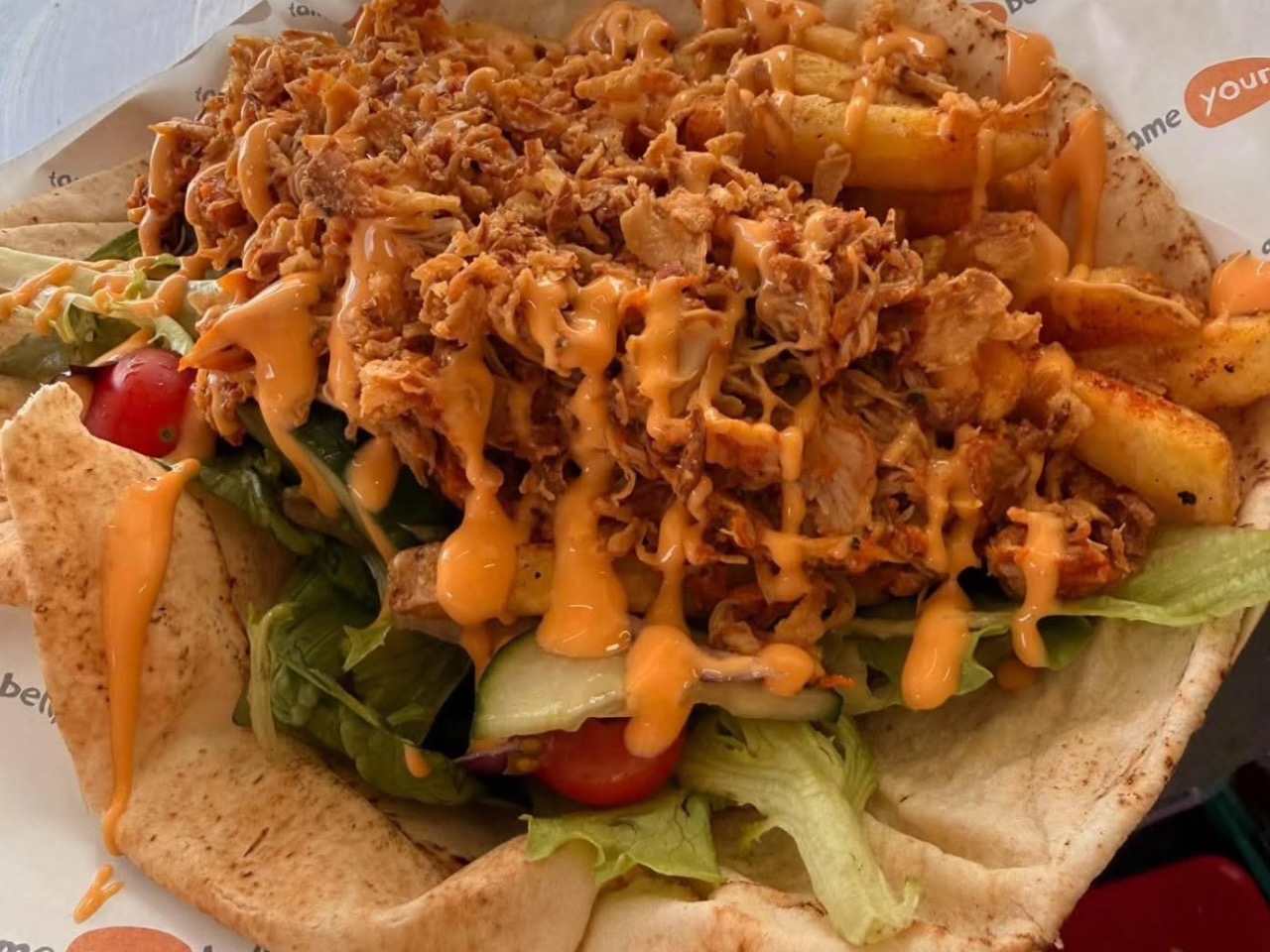
During year-end crunch weeks, a hot meal served on site is one of the simplest ways to keep a busy team going. Book office catering for the specific days when workloads peak, serve food people can eat quickly and present it as a thank-you rather than an expectation to stay late.
For finance, sales and operations teams, the last weeks of the year can be relentless. Quarter-end, year-end close, targets and project deadlines all land at once. Office catering brought onto your site during those weeks keeps people fed without anyone needing to leave the building, and it tells staff the extra effort has been noticed.
Why does feeding staff matter during crunch weeks?
Because lunch is usually the first thing people give up when they’re busy. Under pressure, staff skip breaks, eat at their desks from a meal deal or grab whatever’s nearest. By mid-afternoon, energy and concentration drop just when the workload is heaviest.
A hot meal brought to the site removes the choice between taking a break and getting the work done. People can step away for fifteen minutes, eat properly and get back to it, without the time it takes to go out and find food in the cold.
It also has a social effect. In busy periods, teams often work in silos, heads down. A shared lunch from the same hatch brings people together for a short time, which helps morale more than a motivational email ever will.
What kind of catering suits crunch weeks?
Hot food that’s quick to serve and quick to eat. Teams under pressure won’t queue for long or sit down for a full meal, so the service needs to fit into a short break.
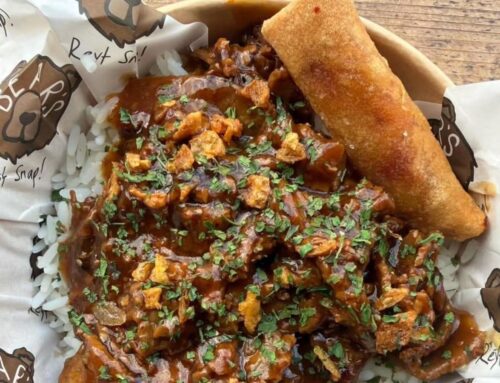
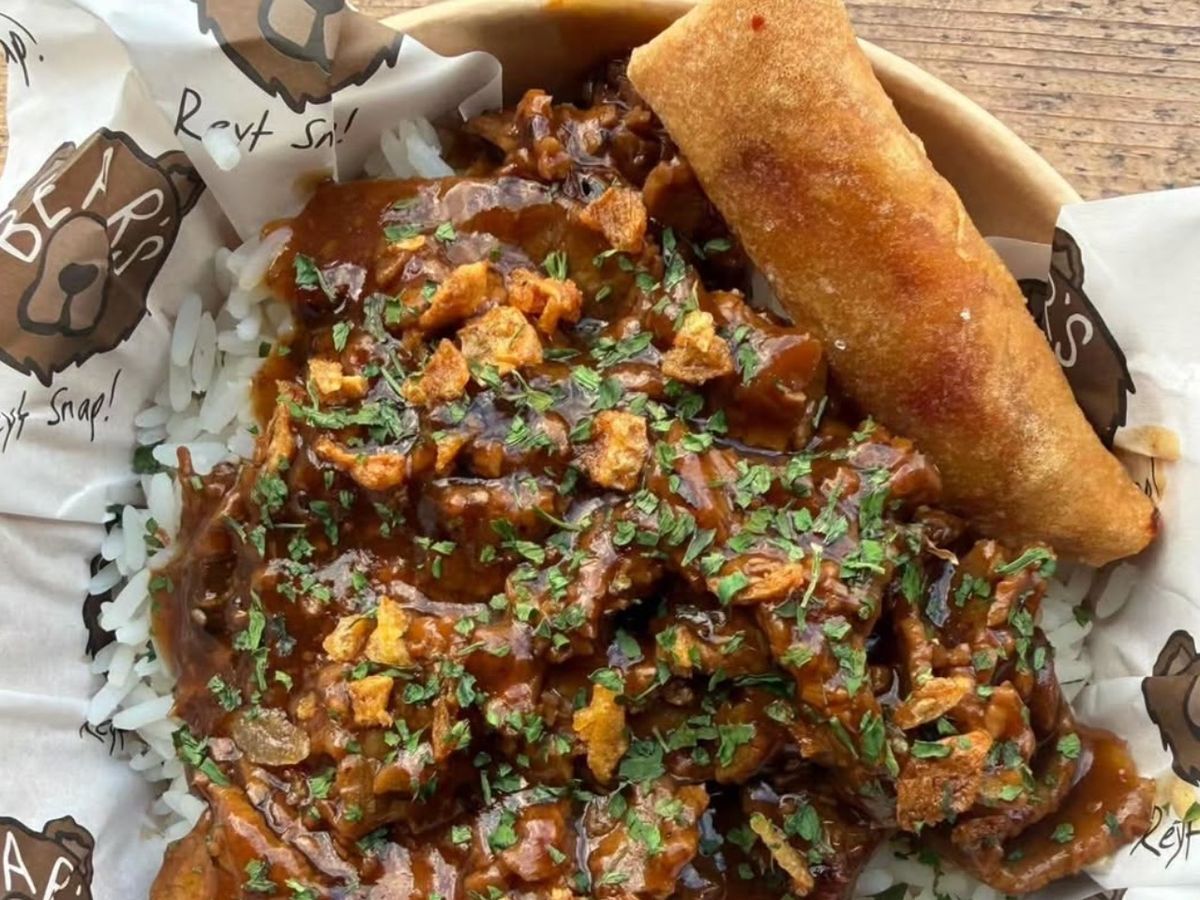
Street food works well here. Pulled chicken in a pitta, flame-grilled burgers, loaded fries and slow-cooked dishes with rice are all filling, familiar and easy to eat with one hand, even at a desk if someone really can’t step away. Vegan, gluten-free, and halal options mean nobody misses out.
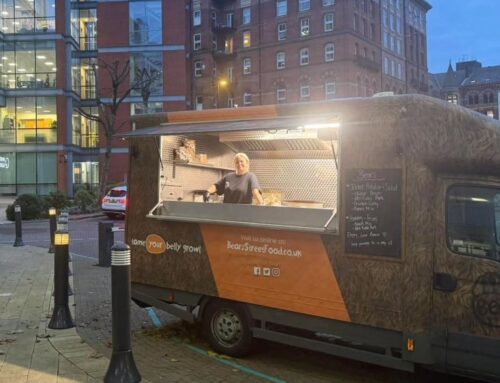
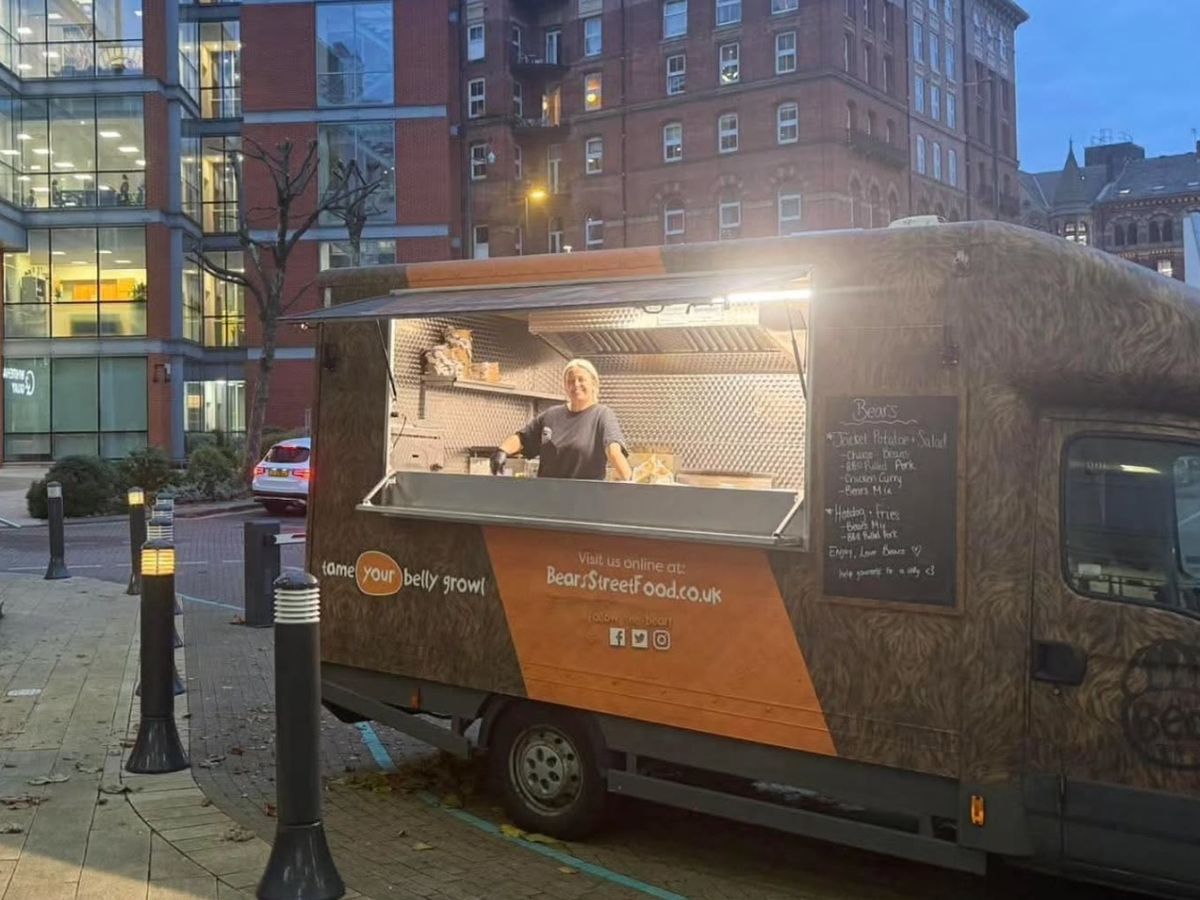
A self-sufficient mobile unit is often the easiest way to do it. Bear’s units bring their own silent power and fresh water and set up in a car park or courtyard, so there’s no need for an office kitchen and no disruption inside the building.
Should you book a one-off or a series of days?
That depends on how your busy period falls. If there’s one obvious peak, such as the final day of year-end close, a single service can work well. If the pressure runs across several weeks, booking a series of days, or a regular day each week through the period, gives people something to count on.
Booking a block in advance also helps with planning. The caterer can hold the dates, and you’re not trying to arrange food at short notice in the middle of the busiest weeks of the year. If you’re already planning the office Christmas party, it can make sense to organise both together.
When should food be served on long working days?
Lunchtime is the obvious slot, but on the longest days a later service can matter more. If teams are regularly working into the evening, food served in the late afternoon or early evening helps them get through without heading home hungry.
Bear’s can operate outside standard hours if needed, so you can set the service time around when your team actually needs feeding. Tell the caterer which days are likely to run late and roughly how many people will still be in the building.
How do you make it feel like a thank-you, not pressure?
Frame it clearly. Catering during busy weeks should feel like recognition of the extra effort, not a signal that people are expected to stay late every night because dinner is provided.
Offer it to everyone involved, not just the people seen staying latest. Serve it at a time that suits the whole team, not only the late shift. And when the busy period is over, mark the end of it properly, whether that’s a team lunch, a social or a contribution to a staff fundraising day that brings people together for a different reason.
What do you need to sort out on site?
Very little, with a self-sufficient caterer. You’ll need a suitable spot for the unit, ideally close to the building entrance, and an idea of how many people will be eating on each day.
Your facilities team will want the caterer’s risk assessment and method statement (RAMS) and insurance documents. If you lease the building or share a site, check whether the landlord needs to approve parking a vehicle on site.
What affects the cost of crunch-week catering?
The number of people, the number of days, the menu and the service times all play a part. A single lunch for one team costs less to provide than a series of days covering several departments with an evening service.
It’s also worth deciding whether the business will cover the food or bring a caterer on site for staff to buy from. During crunch weeks, many companies choose to cover it as a thank-you, but either approach takes the pressure off people finding food themselves. Our guide to planning your Q4 catering budget covers the cost drivers in more detail.
Book catering for your busiest weeks
If you know when your crunch weeks will fall, book them now while dates are still open. We’ll fit the service around your team’s hours and your site.
Contact Bear’s Street Food to plan catering for your year-end push.