When a site brings in temporary workers for the Q4 peak, workplace catering needs to scale with them. That means agreeing extra service days, longer hours or additional units ahead of the first agency start dates, then scaling back down in January. A flexible contract catering partner makes both directions straightforward.
Warehouses, distribution centres and fulfilment sites often take on large numbers of temporary staff from autumn through to Christmas. Shift patterns stretch, breaks get busier and a catering arrangement designed for the core workforce can suddenly feel undersized. If you manage contract catering for a site with a seasonal peak, here’s how to plan for it.
Why does the Q4 peak put pressure on workplace catering?
Because headcount rises faster than the catering usually does. A site that runs smoothly with its permanent team can see queues grow, popular dishes sell out early and some shifts left with nothing, simply because more people are on site and breaking at the same times.
Extended hours add to it. Peak often means extra shifts, longer days and more night and weekend work. If catering only covers the core day shift, a large part of the seasonal workforce never sees it.
Space can run short as well. Seating and sheltered areas sized for the permanent team fill up quickly when headcount rises, so it’s worth thinking about where people will actually eat before the peak begins, not only where the food will be served.
How can workplace catering scale for temporary staff?
By adjusting the number of units, the service days and the hours to match the peak. With a mobile, self-sufficient caterer, scaling up doesn’t need building work or new kitchen equipment. It’s a case of adding capacity where and when it’s needed.
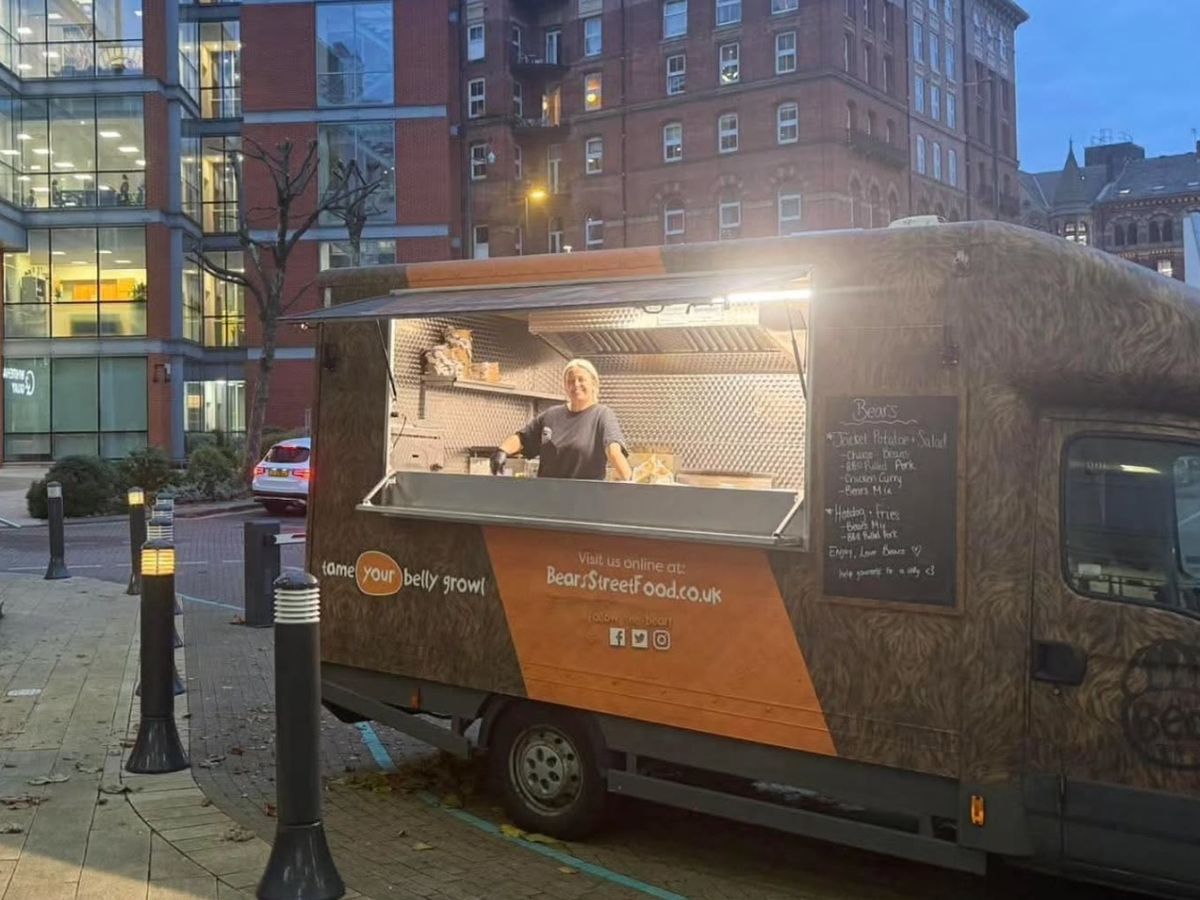
Bear’s units bring their own silent power and fresh water, so you can add a second unit elsewhere on site without extra infrastructure. You can adjust the number of units and service frequency for seasonal staff numbers, then scale back once the peak is over.
If your site runs nights during peak, plan those shifts in too. Our guide to hot food for the winter night shift covers break timing and safety after dark.
When should you plan peak-season catering?
Before the first temporary staff arrive. Once agency workers start, the site is already busy, and arranging extra catering at that point is harder for everyone.
Agree the plan with your caterer when you know your peak staffing numbers and start dates. That gives them time to schedule units and staff around your busiest weeks, which matters because many caterers are also busy at this time of year.
How do you estimate catering numbers for peak?
Start with headcount by shift, not total headcount. What matters for catering is how many people will be breaking at the same time on each shift and on each day.
Then talk to your caterer about likely take-up. Not everyone will buy food every day, and take-up varies by site, shift and season. Your existing service is the best guide: if you know roughly what share of the permanent team uses the canteen, that’s a sensible starting point for the seasonal workforce too.
Review it weekly once peak starts. Numbers on the ground rarely match the plan exactly, and a quick weekly conversation lets you adjust service before queues or waste become a problem.
Does good catering help with temporary staff?
It helps make a good first impression, which matters with a workforce that’s new to the site. Temporary staff join in large numbers, often in the darkest, coldest weeks of the year, and the conditions they find in their first few days shape how they feel about the job.
A proper hot meal on site is a visible sign that the business looks after the people working for it, permanent or temporary. On sites with limited local food options, it can also be the difference between staff eating properly and going without during long shifts.
What if you have more than one site?
Plan peak catering across all sites together. If several sites peak at the same time, a single catering partner who can scale across all of them is easier to manage than separate arrangements at each location. Bear’s business catering service is designed for consistent service across multiple sites, and our guide to keeping catering consistent across multiple sites explains how to approach it.
How does peak-season catering affect the budget?
On a zero-subsidy model, the business doesn’t carry a subsidy or capital spend, even when service scales up. The caterer brings the kitchen, power and water, and staff buy their food. The main cost to the business is the space and access on site.
The flexibility to scale back down matters as much as scaling up. When the peak ends in January, you shouldn’t be locked into a level of service sized for Christmas. That’s worth building into any agreement, and our guide to reviewing or switching your contract caterer covers what to look for.
Plan your peak-season catering now
If your site is gearing up for peak, talk to us before the first temporary staff start. We’ll plan units, service days and hours around your shift patterns and headcount.
Contact Bear’s Street Food to plan catering for your peak season.