A Bonfire Night event for staff or clients works best with hot, hearty food served from a self-sufficient catering unit, positioned well away from the bonfire and fireworks but close to where guests gather. Serve before the display starts, keep the queue moving and give people something warm to hold in the cold.
Bonfire Night falls on a Thursday this year, which makes Thursday 5 or Friday 6 November the natural choice for a workplace event. If you’re planning one at your site or a hired venue, corporate events catering from a mobile street food unit handles the food side without needing a kitchen or power on site. Here’s what to think about.
Why host a Bonfire Night event for staff or clients?
Because it gives people a reason to stay together after work at a time of year when most social plans have gone quiet. Summer barbecues are long gone and the office Christmas party is still weeks away. A relaxed evening with food and fireworks fills that gap.
It works for client hospitality too. An outdoor evening around a bonfire is far less formal than a dinner, and it’s easier to have proper conversations standing in a group with something warm in hand than across a restaurant table.
What food should you serve at a Bonfire Night event?
Serve hot, filling food that people can eat standing up in the cold. This is the one night of the year where hearty, traditional comfort food is exactly what everyone wants.
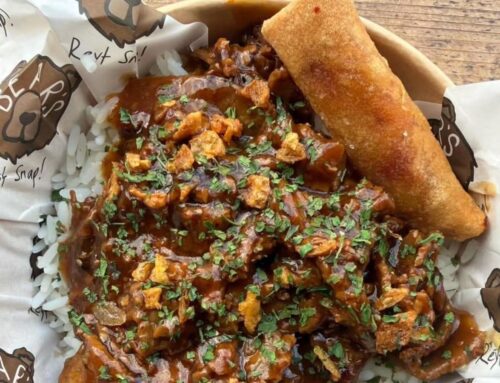
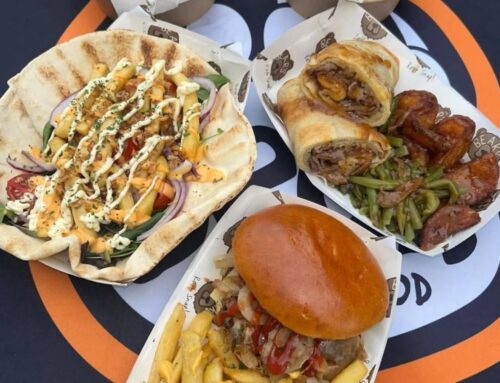
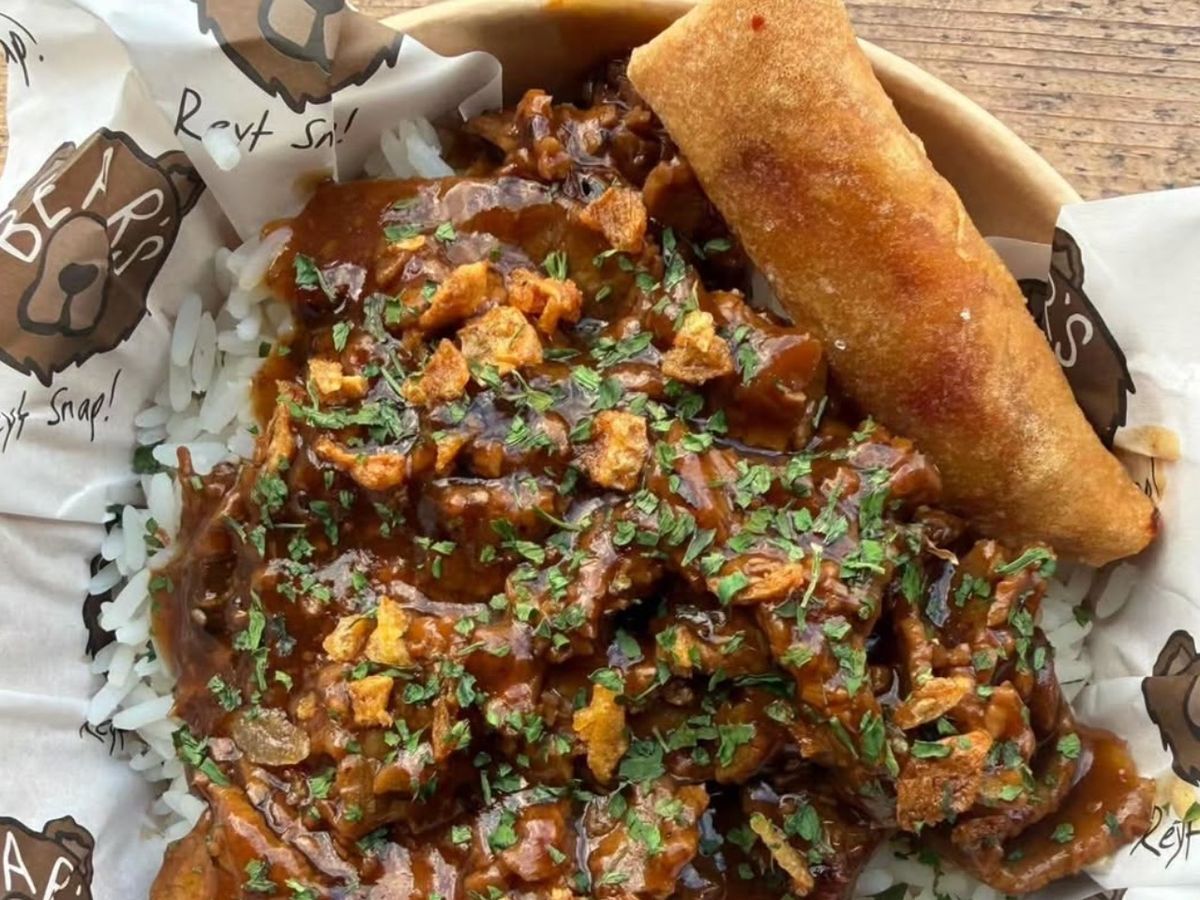
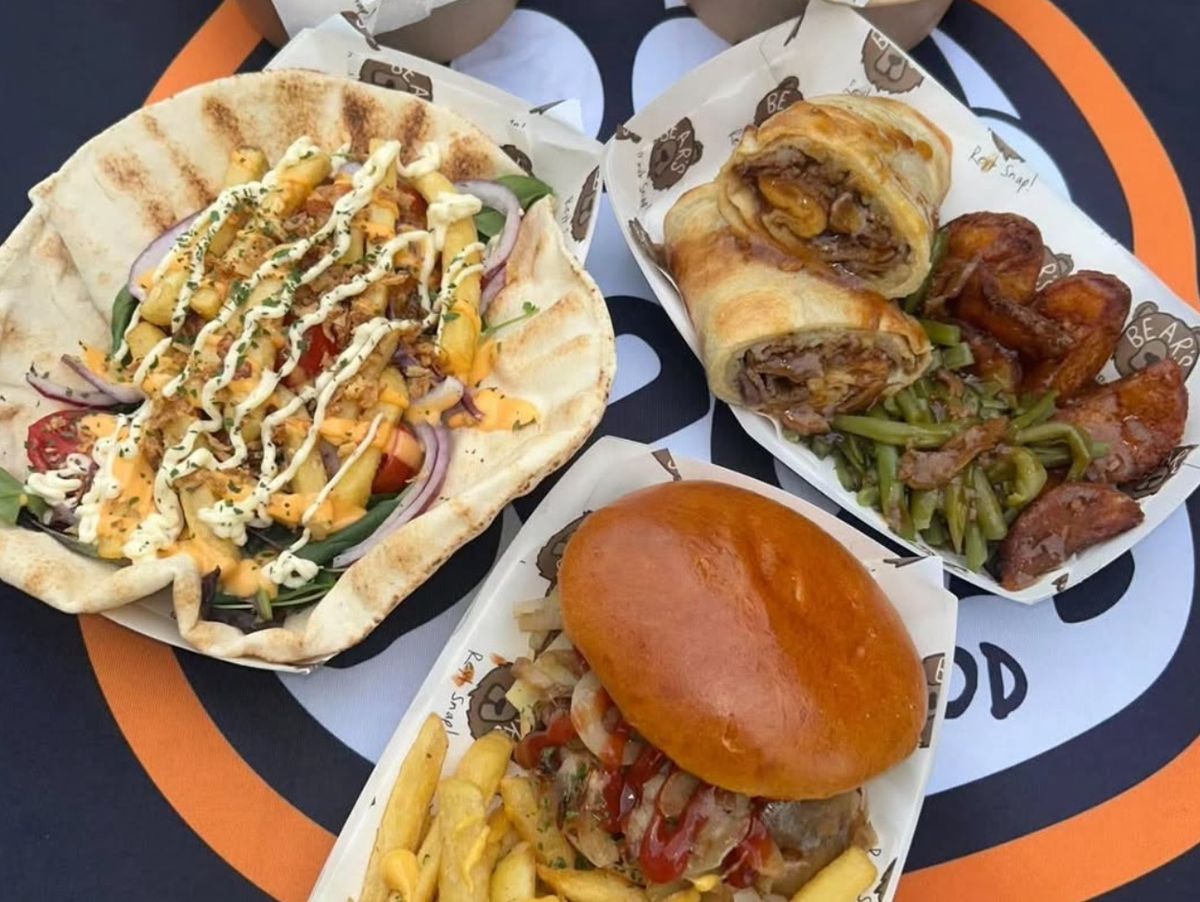
Sausages with mash and gravy suit the occasion perfectly. So do flame-grilled burgers, slow-cooked pulled meats and loaded fries, all of which hold heat well and can be eaten with one hand while the other holds a drink. A chocolate brownie afterwards rounds off the evening.
Think about drinks as part of the plan. Hot drinks go down well on a cold night, so decide early who’s providing them and where they’ll be served.
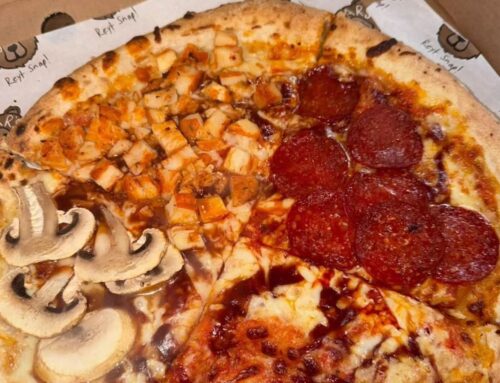
As with a Halloween food event for staff or any other work occasion, build in choice for different diets. Bear’s menus include vegan, gluten-free and halal options as standard, so everyone eats from the same hatch.
Where should the catering unit go?
Well clear of the bonfire and the firing area, but close enough to the gathering point that people don’t have to walk far in the dark. If you’ve booked a professional display operator, they’ll set the safety distances and the area spectators must stay behind. The catering unit should sit firmly on the spectator side of that line.
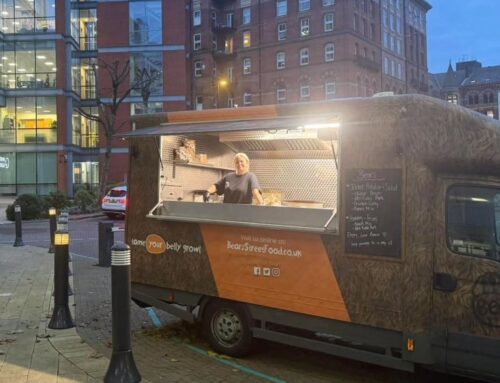
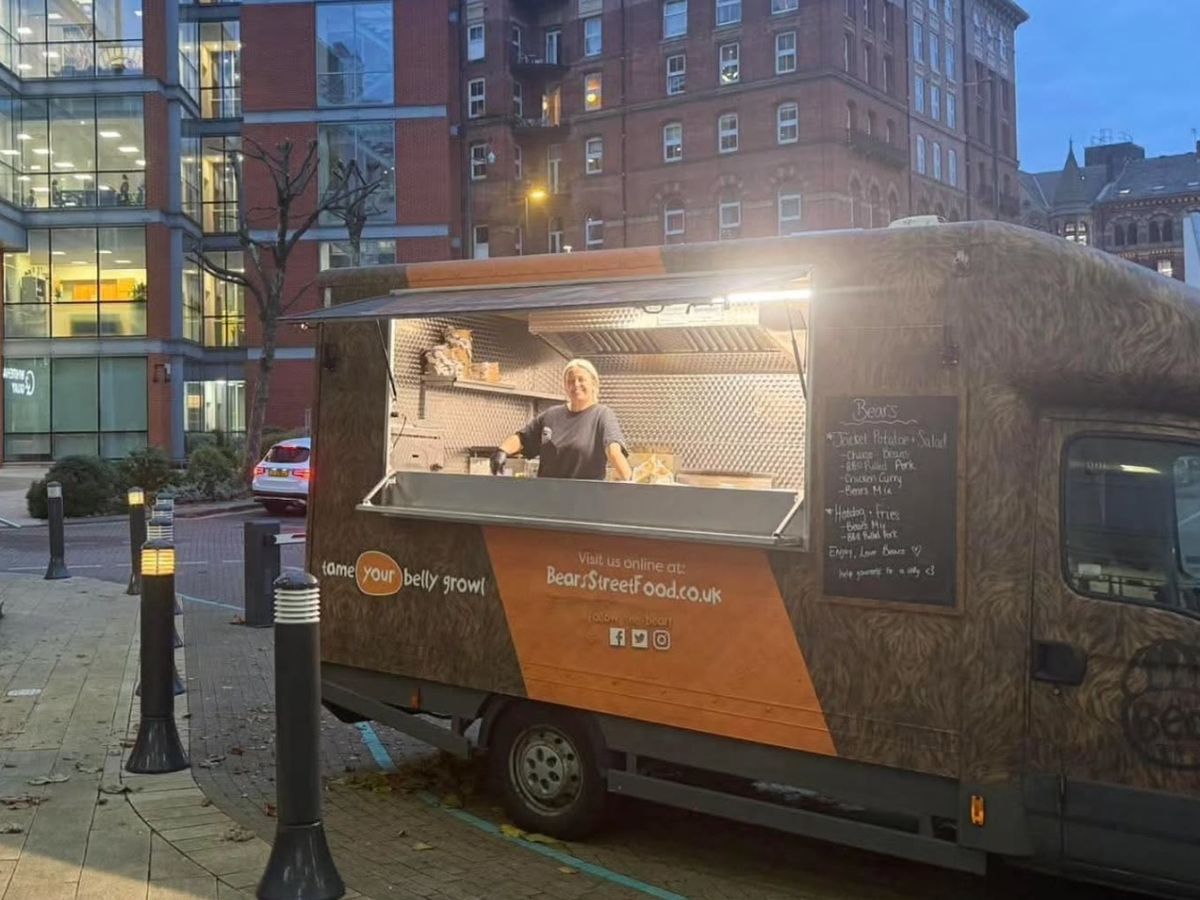
Look for level, firm ground. Early November often means wet grass, and a heavy vehicle on soft ground causes problems for everyone. A car park, yard or hardstanding area is usually the safest choice. Bear’s units bring their own silent power and fresh water, so there’s no need to position them near a building connection.
Lighting is the other major consideration. Sunset is well before five in early November, so the route between the catering, the seating and the display needs to be properly lit before guests arrive.
How do you serve a crowd before the display starts?
Open the hatch as guests arrive and keep it open in the run-up to the fireworks. Most people want to eat before the display rather than queue during it, so the busiest period is usually the first hour.
Throughput matters more than menu length here. Ask your caterer how many people they can serve in the time between arrival and the display, and whether a second unit makes sense for a larger group. Bear’s serves events from around 50 guests up to more than 2,000, so the set-up can be matched to your numbers.
Keeping service going briefly after the display is worth considering too. It gives people a reason to linger and stops everyone leaving at once.
What do you need to sort out before the night?
Most of the work is done in the weeks before. Agree the layout with your display operator, if you’re using one, so the catering position is fixed early. Confirm lighting for the serving area and walkways. Check whether your landlord or site owner needs to approve vehicles and an evening event.
Your health and safety team will also want a risk assessment and method statement (RAMS) and proof of insurance from the caterer. Bear’s provides these as standard. Finally, plan for weather. Food is cooked and served from inside the unit, so rain won’t stop service, but guests will need somewhere sheltered to eat if the evening turns wet.
What affects the cost of Bonfire Night catering?
Headcount, menu choice, service length and the number of units needed are the main factors, along with how far your site is from the caterer’s base. A longer service, running before and after the display, involves more staff time than a single serving window.
When you compare options, look at the cost of the whole evening against what your staff or clients get from it. A well-fed crowd that stays for the display and lingers afterwards is a much better return than a cold, hungry one that leaves early.
Book catering for your Bonfire Night event
Early November dates book up quickly. Fix your date and rough numbers, and we’ll plan the food around your venue and display.
Contact Bear’s Street Food to talk through your Bonfire Night event.