Staff events catering works best when you treat it as an operational decision rather than a menu choice. Start with headcount, the length of the break, where on-site food can be served and which dietary needs you must cover. Get those four right and almost any format, from a team lunch to an awards day, becomes straightforward to plan.
This guide is written for the people who usually organise these days: HR teams, office managers and facilities leads. It covers what to ask, what to check and where costs come from. If you want to see how Bear’s approaches internal events, our office catering and staff events page sets out the service in brief.
What counts as a staff event for catering purposes?
For catering purposes, a staff event is any occasion where you feed a large share of your own workforce at once, usually within a fixed window. That covers recurring team lunches, town halls and all-hands meetings, employee appreciation days, awards, launch days after an office move and the big seasonal celebrations.
Each has a different rhythm. A monthly lunch needs to be quick and repeatable. An awards afternoon can be more of a show. Christmas is a planning exercise in its own right, which is why we’ve covered it separately in our office Christmas party catering guide.
Staff events also differ from client-facing occasions. When guests are external, presentation and hosting take priority, and we cover that in our guide to planning corporate event catering. With your own team, the measures that count are simpler: did everyone eat, did it run to time, and did people feel it was worth turning up for?
How far in advance should you book a caterer for a staff event?
Book as soon as you have a confirmed date and a rough headcount, because the date is the one thing a caterer cannot move. Popular periods such as December fill up first, and recurring events are easier to secure when booked as a series rather than one at a time.
There is no fixed industry lead time, so ask your caterer what they need for your event size and season. Bear’s runs a fleet that can deploy at minimal notice, which helps when plans change late, but booking early still gives you the widest choice of dates. If you are planning the year ahead, our post on building a 2027 staff events calendar walks through mapping your key dates in one go.
Can you cater a staff event if the office has no kitchen?
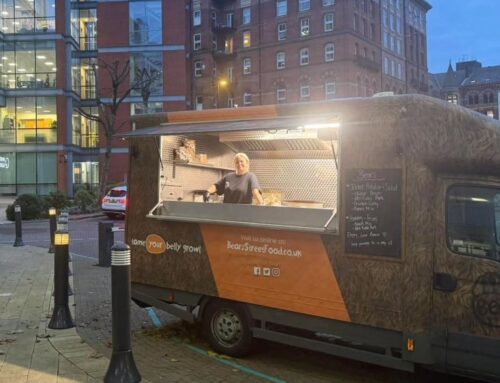
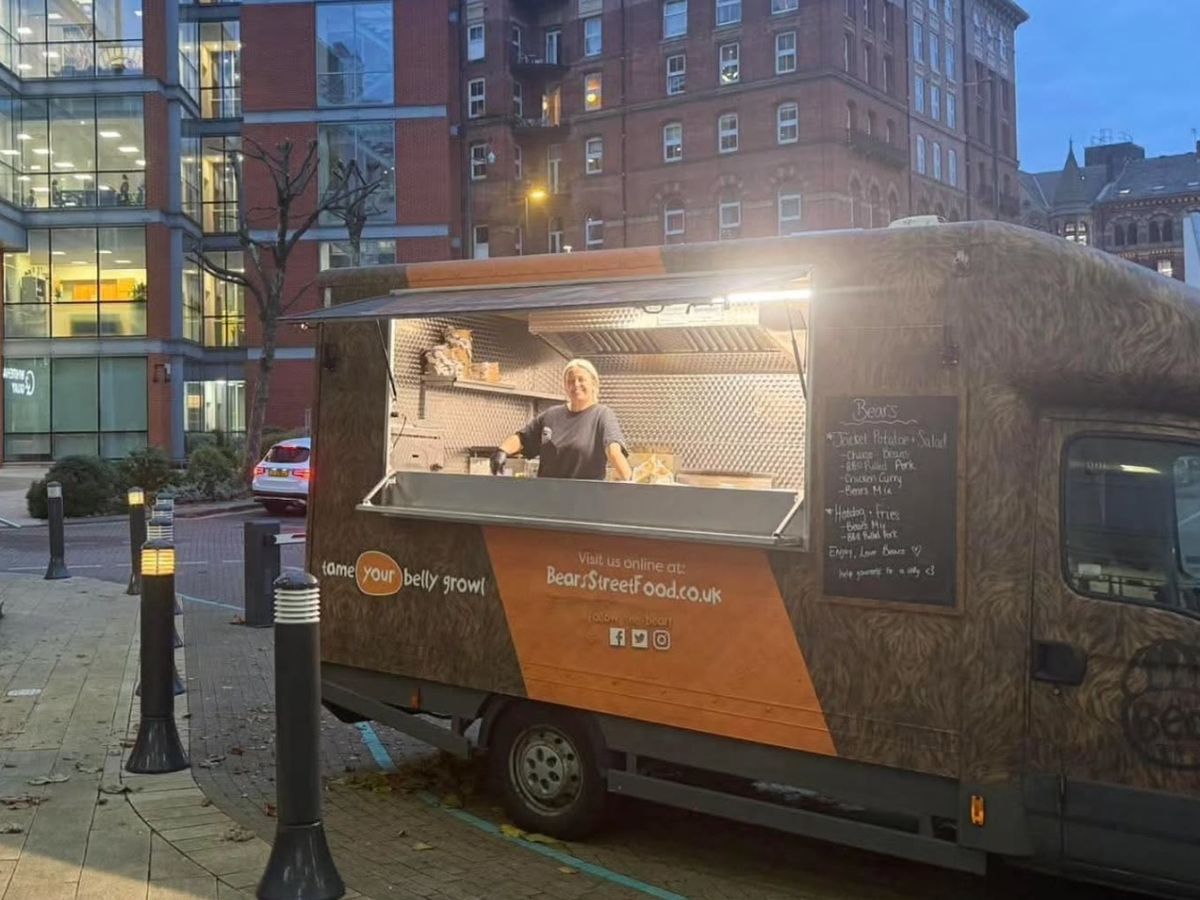
Yes. A self-contained mobile kitchen removes the need for any on-site cooking facilities, and Bear’s units bring their own silent power and fresh water, so nothing draws on your building’s supply.
What you do need is somewhere to park the unit and space for people to queue and collect food. A car park, a loading bay or a courtyard usually works. Walk the site with your caterer beforehand to agree access times, where vehicles will sit and how staff will get from their desks to the serving point. Wellbeing days follow the same logic, and our article on running a wellbeing day without a kitchen covers that format in more detail.
Which staff event formats suit street food best?
Formats with a clear start time, a known headcount and an outdoor or semi-outdoor serving space suit street food best. Team lunches, all-hands days and appreciation events fit naturally, because people come to the food in waves and eat together.
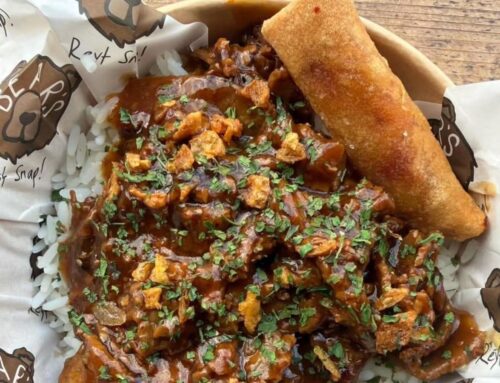
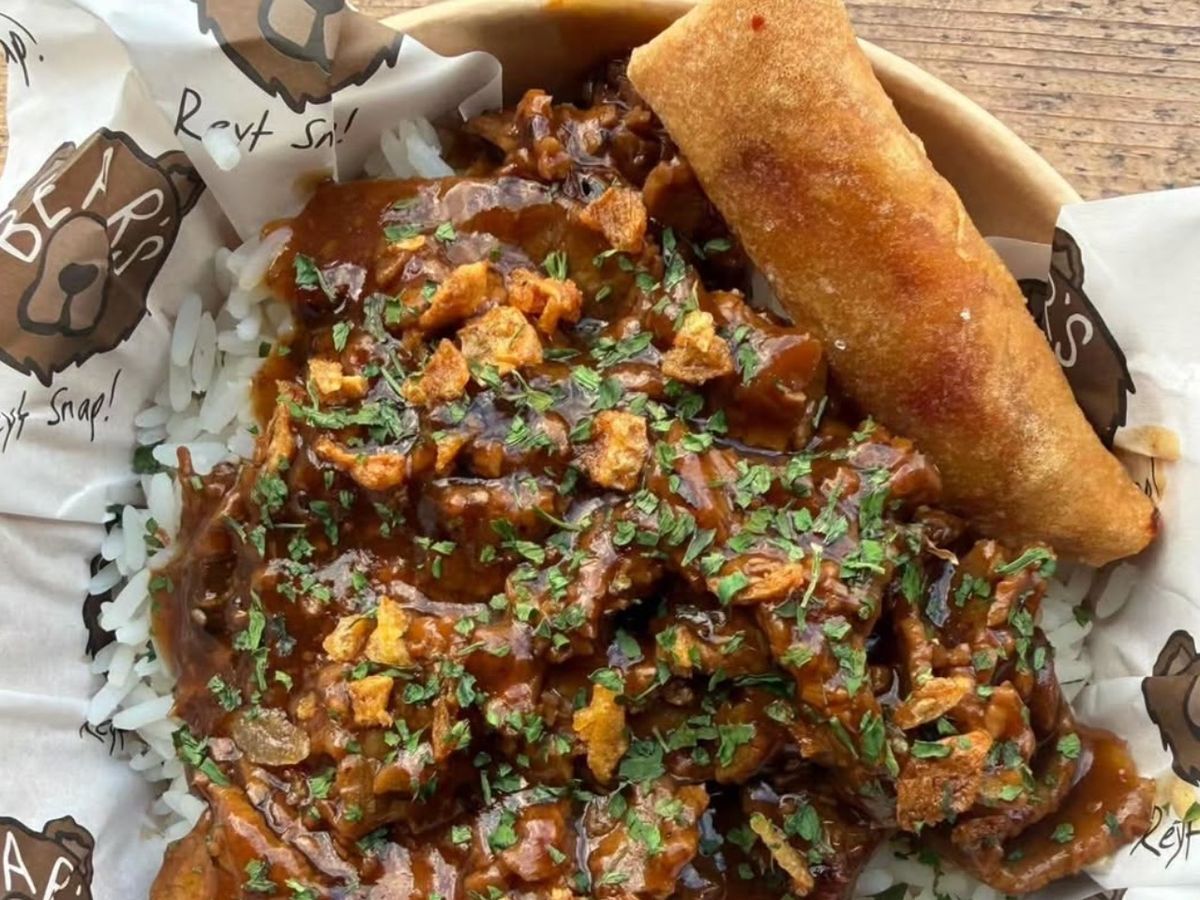
Flame-grilled burgers, wood-fired pizza and slow-cooked pulled meats hold up well for large groups, and the cooking itself becomes part of the occasion. Events that need table service or several plated courses are a different brief, so say early if you want something more structured.
How do caterers handle vegan, gluten-free and halal requirements?
A good caterer builds them into the core menu rather than treating them as extras. At Bear’s, vegan, gluten-free and halal options are provided as standard, so you don’t need a separate order for those colleagues.
Collect dietary needs when you send invitations, not on the day, and share the totals with your caterer. For allergies, ask how allergen information is displayed at the serving point and how cross-contact is managed. The answer should be specific. People with complex requirements are far more likely to attend when they can see their needs were planned for.
What documents should a staff event caterer provide?
Expect a risk assessment and method statement (RAMS), proof of public liability insurance and a current food hygiene rating as a minimum. Bear’s operates with full RAMS, public liability insurance and five-star food hygiene ratings.
Your own health and safety lead or insurer may want more, such as particular cover levels or vehicle details, so check what your organisation requires before you sign off a supplier. How quickly a caterer produces this paperwork also tells you a good deal about how organised they are.
How do you avoid long queues at a staff lunch?
Match serving capacity to the length of your break, then spread demand across it. A caterer set up for high-volume service can feed hundreds of staff within a normal lunch window, but even the fastest operation struggles if everyone arrives in the first ten minutes.
Staggering release times by team or floor is the simplest fix. A focused menu helps too, since a few well-chosen dishes move faster than a sprawling choice. If the event recurs weekly, the format matters as much as the food, and our comparison of street food Fridays and daily canteen cover looks at which suits which workplace.
How do you encourage staff to turn up to a catered event?
Make the food visible and the timing convenient. A catered event competes with deadlines, meetings and, for hybrid teams, the option of staying at home. Announce what’s being served and when, pick a day when most people are already on site, and keep the serving point close to where people work so attending doesn’t feel like a trip.
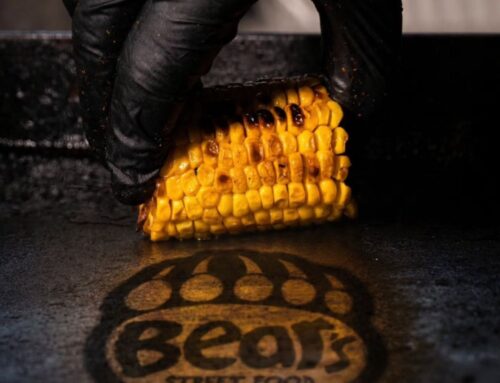
Fresh, cooked-to-order food does more than you might expect. A unit cooking in the car park is its own advertisement, and the smell of a flame grill travels further than another all-staff email. For recurring events, consistency matters: once people know lunch happens every other Thursday, they start planning their week around it.
What affects the cost of staff event catering?
Cost follows a handful of drivers: headcount, how long service runs, how many units you need to hit your time window, the menu, the location and the date. A short, intense lunch for a large team may need more units than a longer, relaxed service for the same number of people. Remote or hard-to-reach sites add travel and set-up time, and peak dates carry more demand.
When you compare quotes, compare what’s included as well as the total. Who brings power and water? Are dietary options standard or an extra? Are set-up and clear-down covered? Value comes from people eating well and getting back to work on time, not from the lowest figure on a page. Where staff pay or donate, as on a charity day, the planning shifts again, and our post on fundraising day catering covers how.
What should you tell a caterer when you ask for a quote?
Give them the details that shape the operation and you’ll get a quote you can rely on:
- date, start time and how long service needs to run
- expected headcount, and how firm that number is
- the location on site and vehicle access
- dietary requirements and allergy numbers
- the purpose of the event, such as a team lunch, town hall or awards day
- site rules, including permits, parking or security sign-in
With that in hand, the conversation moves quickly to menu and format. For recognition-led occasions, our guide to end-of-year staff awards catering shows how the brief changes when food becomes part of the celebration.
Ready to plan your next staff event?
Tell us your date, headcount and site, and we’ll talk you through the options. Get in touch with Bear’s.