To book location catering for a 2027 production, send your caterer a short brief covering shoot dates, locations, call times, cast and crew numbers per meal window, unit base access and dietary needs. The earlier that brief arrives, the more choice you have on dates, units and how service fits around your schedule.
This guide is for production managers, line producers and location managers getting ahead of next year’s slate. It sets out what to include, what to ask and where catering plans tend to come unstuck. For an overview of how Bear’s works on set, see our TV and film catering page.
How far in advance should you book film catering?
Book as early as your dates are reasonably firm. There’s no single industry standard, and the right lead time depends on crew size, location and season, so ask your caterer directly.
Busy periods tighten availability, and a long shoot with a large unit takes more planning than a single-day commercial. Bear’s can deploy units at minimal notice when schedules shift, but locking in your main block early protects your preferred dates. If you’re still comparing suppliers, our checklist for choosing a TV and film catering partner covers what to look for before you commit.
What information does a location caterer need?
A caterer needs anything that affects how many people they feed, when and where. A solid starting brief includes:
- shoot dates, including prep, pick-up or reshoot days
- unit base locations, with postcodes and access notes
- call times and expected meal windows for each day
- cast and crew numbers per meal, including supporting artists on crowd days
- dietary requirements and allergies
- night shoots, split days or unit moves
- site contacts and restrictions, such as ground conditions, height limits or permitted hours
Even a partial brief is useful. Gaps can be filled as the schedule firms up, and a caterer who sees the full picture early can flag problems before they reach the call sheet. Bear’s menus cover all dietary needs as part of the standard service, so the dietary section of your brief is about numbers and allergies rather than whether options exist.
How are crew numbers confirmed for catering?
Numbers typically start as an estimate in pre-production and tighten as the schedule locks, with final figures confirmed close to each shoot day. Agree with your caterer how and when you’ll send updates, and decide who on your team owns that job.
Crowd days, second unit days and visiting departments are where numbers drift most, so flag them separately. Bear’s serves from several hundred to over a thousand people per meal window, which means scale is rarely the issue. Accuracy is what keeps waste and queues down. Crowd days cause the biggest swings, and our post on catering for crowd days and supporting artists covers how to plan for them.
How many meals per day should you plan for?
Plan meals from the schedule rather than from a fixed rule. Early calls often mean breakfast at base, a main meal mid-shift and something later on long days.
Check your own crew agreements for any requirements on breaks, as those vary between productions. Bear’s aligns service with the call sheet, providing hot, flame-grilled meals for early starts, night shoots and split shifts. Our guide to how many meals a film crew needs each day goes through common patterns.
How do night shoots and split days change the brief?
They change the timing of every meal, so flag them as early as you can. A night shoot turns the day upside down: the main meal may fall in the small hours, and crew arriving for the evening still expect something substantial. Split days, where the call sits mid-afternoon and runs late, often mean two main services rather than one.
Your caterer needs the actual hours, not just a note that nights are planned. Bear’s provides flexible 24/7 service, so unsocial hours are workable, but the menu, staffing and arrival time of the unit all follow from the schedule you share. If the shoot flips between days and nights within a week, say so, because that affects how the catering team rotates as well as what goes on the menu.
Do location caterers need site power or water?
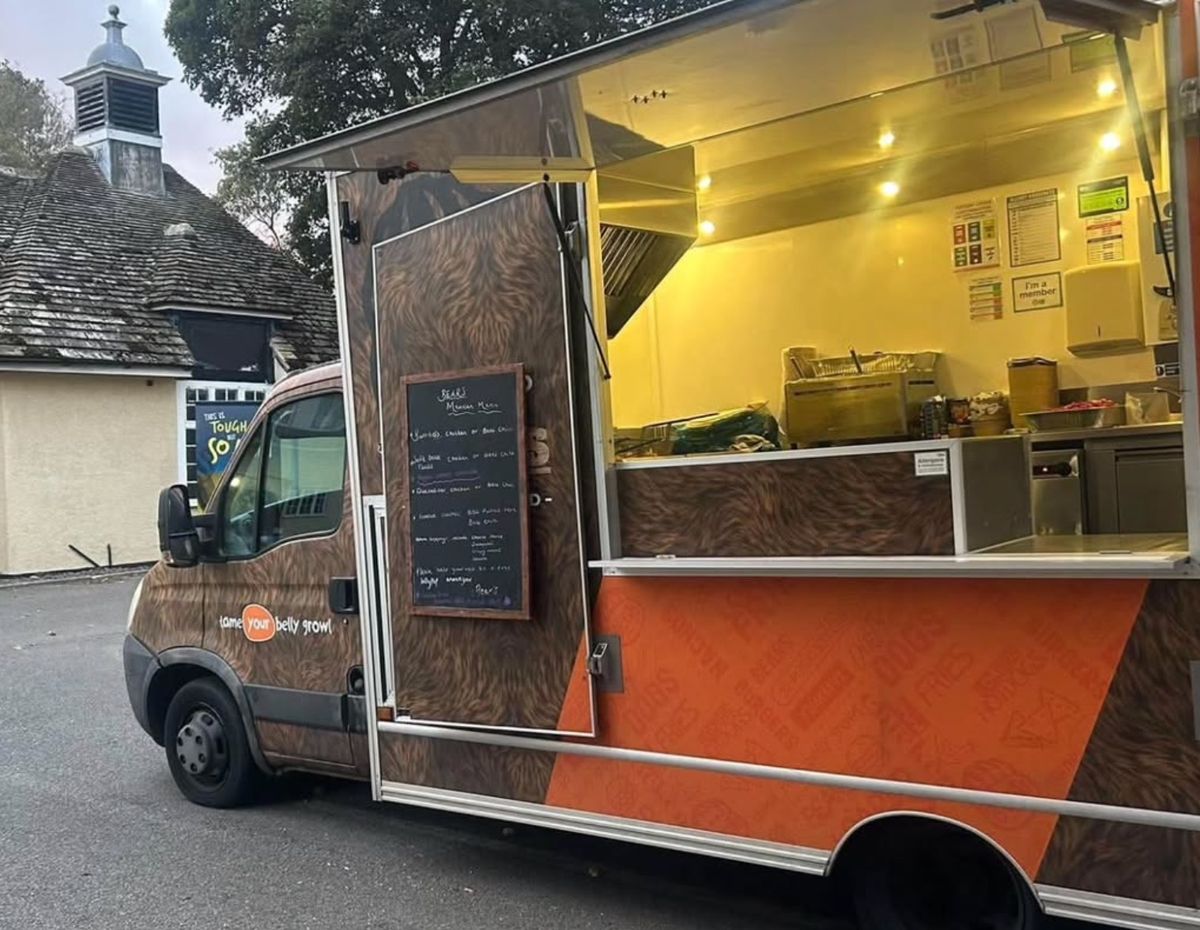
Not if they’re properly self-sufficient. Bear’s units carry their own silent power and fresh water, so they can operate at remote rural sites, on tight urban streets or on studio backlots without drawing on local supplies.
Silent power also keeps generator noise down near sound recording, though where unit base sits in relation to set remains a decision for your location and sound teams. Your brief should still describe the ground and access, because a unit needs a safe, level spot it can reach and leave. Our article on what location managers want from a caterer lists the site details worth sharing.
What paperwork should a film caterer provide?
Ask for RAMS and insurance confirmation at the booking stage, not the week before the shoot. Bear’s provides comprehensive RAMS and carries the insurance certifications required for professional set access.
Your production’s insurer and health and safety adviser will tell you which documents and cover levels your shoot needs, so check with them and pass those requirements to your caterer early. Location owners and local authorities may set conditions of their own.
How should you plan for weather and schedule changes?
Build flexibility into the booking and agree up front how changes will be handled. Winter shoots move: a rained-off exterior becomes a cover set, or a whole day shifts.
Ask your caterer how much notice they need to move unit base, change call times or adjust numbers and get the answer in writing. Mobile, self-contained units adapt more easily than suppliers tied to a fixed kitchen. We look at this in how location catering adapts when winter moves your shoot.
Should your caterer be involved in prep?
Yes, if you can manage it. Bringing your caterer into recces or prep week lets them see unit base locations, check access and spot issues while there’s still time to fix them.
It also means the team feeding your crew on day one already knows the schedule. Our post on prep week and tech recce catering covers feeding the team before principal photography as well as planning ahead of it.
Where do location catering plans usually go wrong?
Most problems trace back to information arriving late, not anything happening on the day. Numbers that weren’t updated after a crowd call changed, a unit base that turned out to be soft ground, an access route with a weight or height restriction nobody checked: each of these is avoidable with a few minutes’ attention in prep.
Ownership is the other gap. When several people on a production each assume someone else has sent the caterer the revised schedule, nobody does. Name one catering contact, give them the call sheet as soon as it exists, and make updating numbers part of their daily routine. A caterer can absorb plenty of change when they hear about it promptly. Surprises at 6am cause queues.
What affects the cost of TV and film catering?
Cost is driven by crew numbers, meals per day, shoot length, location, travel between sites and how often unit base moves. Night shoots, split days and short-notice changes play a part too.
A clear brief helps here as much as anywhere. The more accurate your schedule and numbers, the more reliable the quote. Our explainer on what affects TV and film catering costs breaks these drivers down for line producers building a budget.
Planning a 2027 shoot?
Send us your schedule and numbers and we’ll help shape the catering plan. Contact Bear’s.