Planning catering for a corporate event comes down to a few core questions: how many guests, how long they have to eat, where food will be served and what impression you want to leave. Answer those early and you can size the operation, whether you’re hosting 50 clients at a launch or more than 2,000 people at a company milestone.
This guide is for the people organising externally facing and large-scale occasions: product launches, anniversaries, open days and client hospitality. Internal team events have their own considerations, which we cover in our staff events catering buyer’s guide. For a summary of Bear’s service, visit our corporate event catering page.
How do you plan catering for a large corporate event?
Start with the guest experience and work back to logistics. Decide when people will eat, how long the window is and whether food is the centrepiece or a break between sessions.
With that settled, a caterer can tell you how many serving points you need, where they should go and how long set-up will take. Large events reward early site visits. Walk the route guests will take from arrival to food to seating, and look for pinch points. For events tied to a new building or site opening, our post on catering an office move or site launch covers the extra access questions those days raise.
Should food be the centrepiece or part of the background?
Decide this before you brief anyone, because it changes the whole set-up. When food is the centrepiece, as at a summer party or milestone celebration, the cooking becomes something guests gather around and serving points can take prominent spots. When food supports something else, such as a product demonstration or a run of talks, it needs to be quick, tidy and clear of the main programme.
Live fire cooking works in either case, but placement differs. A wood-fired set-up near the entrance creates a buzz on arrival; positioned beside a break-out area, it gives people a reason to step away from the stage. Talk this through with your caterer and venue together so units, guest flow and staging don’t compete for the same space.
How many guests can a mobile caterer serve?
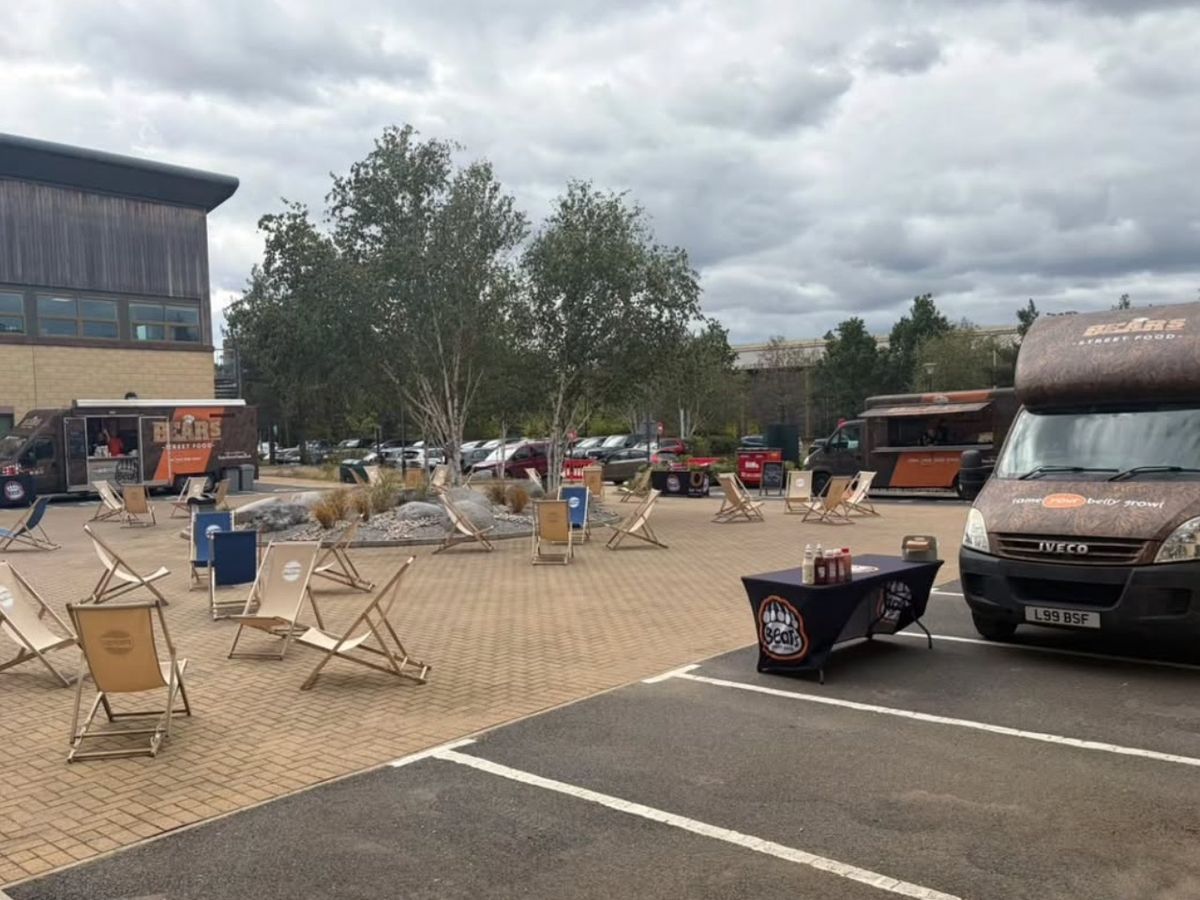
That depends on the caterer’s fleet and available time, so ask for real capacity rather than a headline. Bear’s is built to serve events from 50 to over 2,000 guests, scaling units to headcount and the service window.
The window matters as much as the total. Feeding 1,000 people over three hours is a different job from feeding them in 45 minutes, and the second needs far more serving capacity. Give your caterer both figures and let them size the operation.
Do event caterers need power and water on site?
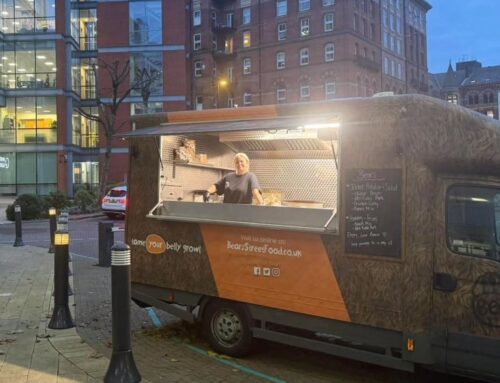
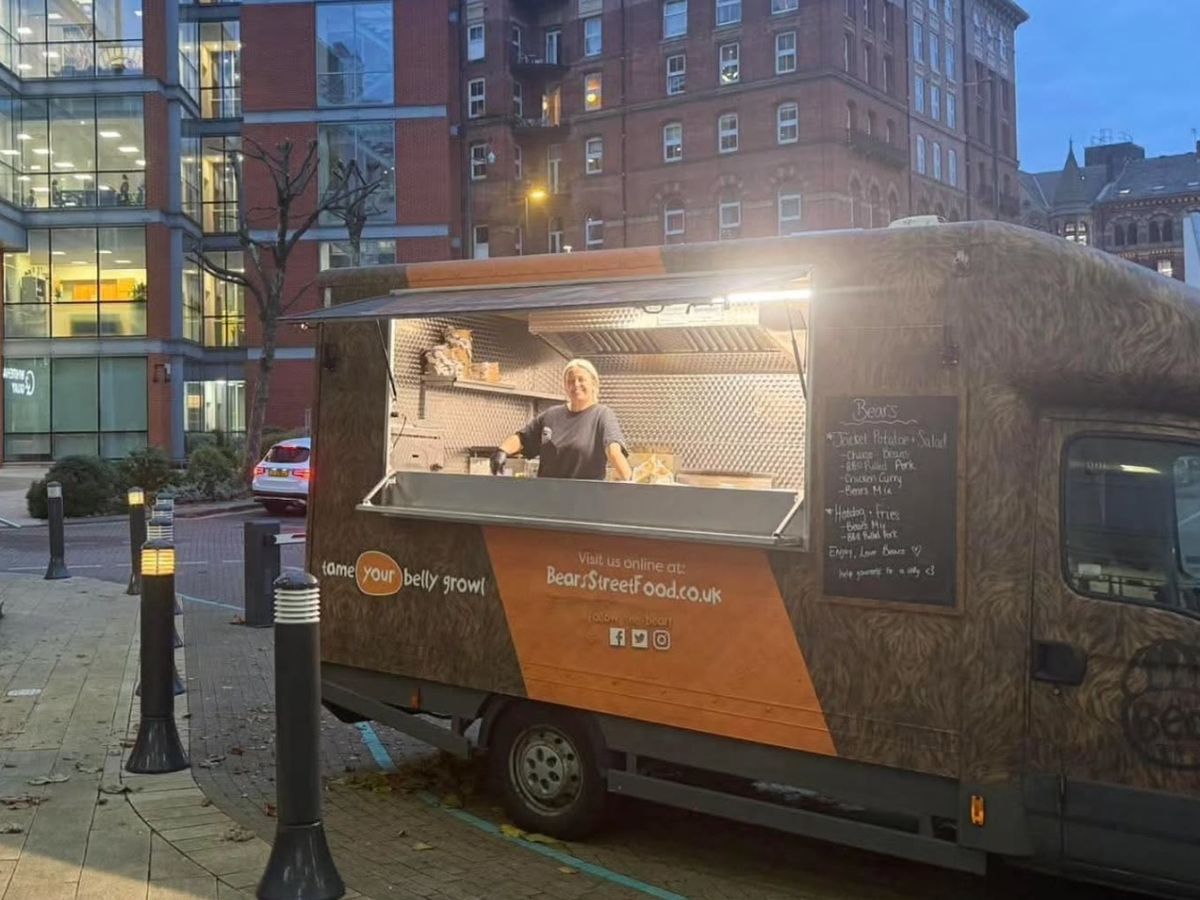
A fully self-sufficient caterer doesn’t. Bear’s brings its own power from silent generators, along with its own water, so set-up is possible in car parks, remote fields or tight urban courtyards. That opens up venues that would otherwise be ruled out because they lack a kitchen. You’ll still need to confirm vehicle access, ground conditions and any venue rules on where units can stand.
Self-sufficiency also cuts down the conversations you need with the venue. There’s no negotiation over kitchen access and no question of whether the building’s supply can cope. Some venues do hold exclusive catering arrangements, though, so check that before you book anything else.
How do you handle guest numbers that keep changing?
Work with a range rather than a single figure, and agree with your caterer when the final number is due. Corporate events attract late RSVPs and last-minute additions, especially where clients or partners are invited.
Give your caterer the minimum you’re confident of and the maximum you could realistically see, then update them as registrations come in. That lets them plan units and stock sensibly instead of guessing. For very large events, ask how they would handle numbers beyond your top estimate and when the cut-off is for adding capacity. Bear’s scales units to the headcount, so the earlier a change lands, the easier it is to accommodate.
Is street food suitable for a corporate event?
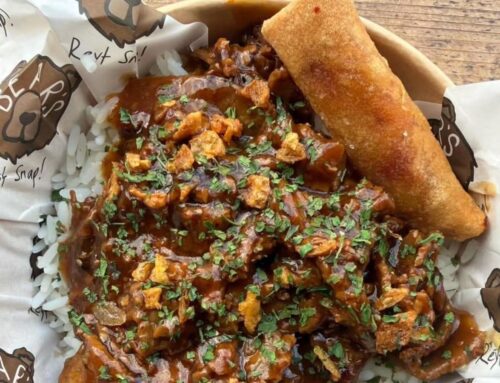
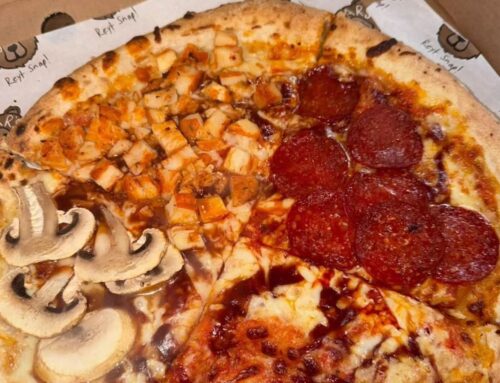
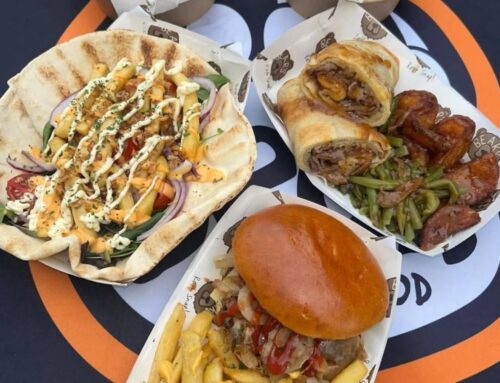
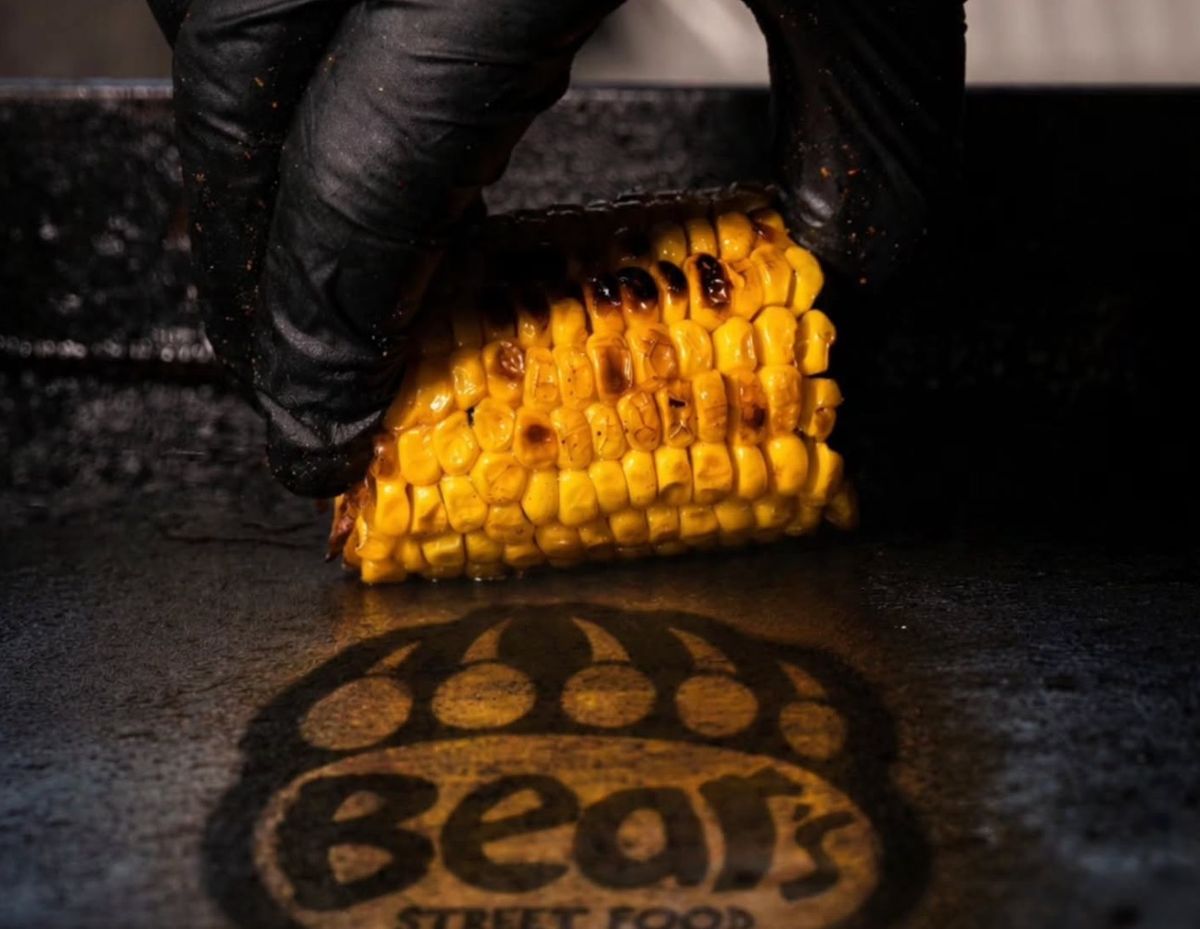
Yes, and it often works better than a buffet when you want people talking rather than hovering around a table. Live fire cooking gives guests something to watch, and wood-fired, flame-grilled and slow-cooked food brings a sense of occasion that trays of sandwiches can’t.
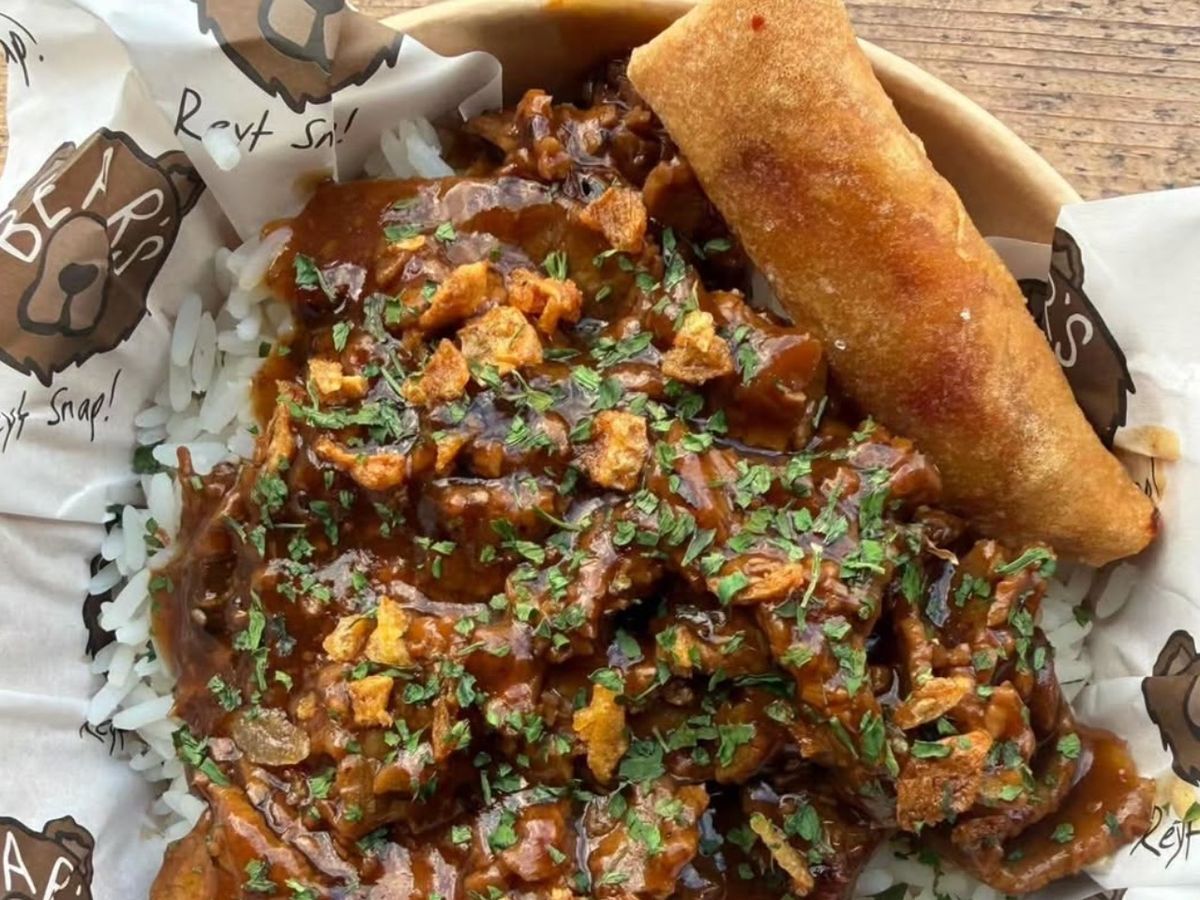
Menus can run from burgers to curry and from barbecue to pizza, with vegan, gluten-free and halal options included as standard, so mixed audiences are covered without slowing service. Professional, branded set-ups look the part in front of clients as well. If your event is hospitality-led, our article on client hospitality catering looks at how food supports relationship-building.
How do you keep service quick at a corporate event?
Plan capacity against your busiest moment, not your average. Most events have a rush: the end of a keynote, the start of a lunch break, the moment a launch presentation finishes.
Spread serving points so queues don’t form in one place, keep the menu focused and agree with your caterer how they’ll handle the first wave. A high-throughput set-up gives guests more time to network and less time standing in line. Conferences and away days face the same squeeze around session breaks, which we cover in our conference and away day catering post.
Can a caterer work at night or at a remote venue?
Bear’s fleet is designed for 24/7 operation and can be deployed to any location, regardless of existing infrastructure. Evening launches, late finishes and events on fields or undeveloped land are all workable.
Night events need extra thought about lighting, guest movement and clear-down times, so build those into your site plan. Our post on bonfire night corporate event catering is a good example of an outdoor evening format in practice.
What paperwork should you ask an event caterer for?
Ask for RAMS, proof of public liability insurance and the caterer’s food hygiene rating. Bear’s operates with full public liability insurance, five-star hygiene ratings and comprehensive RAMS.
Venues, landowners and your own insurer may set additional requirements, so find out what they need and pass it on early. Procurement teams generally find it easier to approve a supplier who sends the full pack without being chased.
What should go in a corporate event catering brief?
The brief should describe the event as a whole, not just the food. Include:
- the purpose of the event and who the guests are
- date, timings and the main service window
- expected guest numbers, with a likely range
- venue address, access route and where units can stand
- dietary and allergy requirements
- branding or presentation expectations
- anything unusual, such as overnight set-up or several service points
If you run events at more than one location, our post on keeping catering consistent across multiple sites shows how one brief can serve several venues.
What affects the cost of corporate event catering?
Guest numbers, service length, the number of units needed to meet your time window, menu choices, location and date all shape the price. Remote sites and late finishes add travel and staffing time, and peak dates carry more demand.
Compare quotes on what’s included, such as power, water, dietary options and set-up, rather than the headline figure alone. It also helps to ask how a quote would change if numbers move up or down, so you know where the flexibility sits before you commit to a final figure. For a wider view of seasonal budgeting, our post on planning your Q4 catering budget breaks down the cost drivers.
Got an event date in the diary?
Share your guest numbers and venue and we’ll plan the service with you. Talk to Bear’s.