If you want a new workplace canteen running from the first week of January, the decisions need making before Christmas. Agree the service frequency, the unit’s position on site and your headcount by break time in October or November, confirm the details in December and the service can start as soon as staff return.
The new year is a natural moment to change how your site feeds its people. Budgets reset, routines restart and staff are more open to new habits. If you’re considering workplace canteen catering for 2027, planning it now means it’s ready for day one rather than arriving halfway through the first quarter.
Why plan a January launch in the autumn?
Because December disappears quickly. Between year-end deadlines, the Christmas party and people taking leave, very little gets decided in the last few weeks of the year. If the decision isn’t made by then, a January launch tends to slip to February or March.
Planning now also fits the budget cycle. Many businesses set next year’s budgets in Q4, so agreeing the service now means it can be built in from the start. With a zero-subsidy model and no capital spend, the budget question is often simpler than people expect, but it still needs to be settled.
What decisions need making before launch?
Four main ones: how often the service runs, where the unit will sit, how many people it needs to serve at each break and what the menu should cover.
Frequency comes first, because it shapes everything else. Headcount by break time matters more than total headcount, since the caterer needs to know how many people will be at the hatch at once. Position on site affects how many people use the service, especially in winter. And the menu needs to cover everyone, including vegan, gluten-free and halal options, which Bear’s includes as standard.
Once those are agreed, the rest, such as paperwork, access and start dates, follows easily.
Should the service run daily or weekly?
That depends on your headcount, your shift patterns and how staff currently eat. Sites with large, stable workforces and limited food options nearby often suit a daily service. Smaller sites, or those with a lot of hybrid working, may get better value from one or two days a week.
If you’re unsure, start with a weekly service and build up as take-up grows. A mobile canteen can adapt to match your shift patterns and staff numbers. We compare the two approaches in Street Food Fridays vs daily canteen cover.
Where should the canteen unit go?
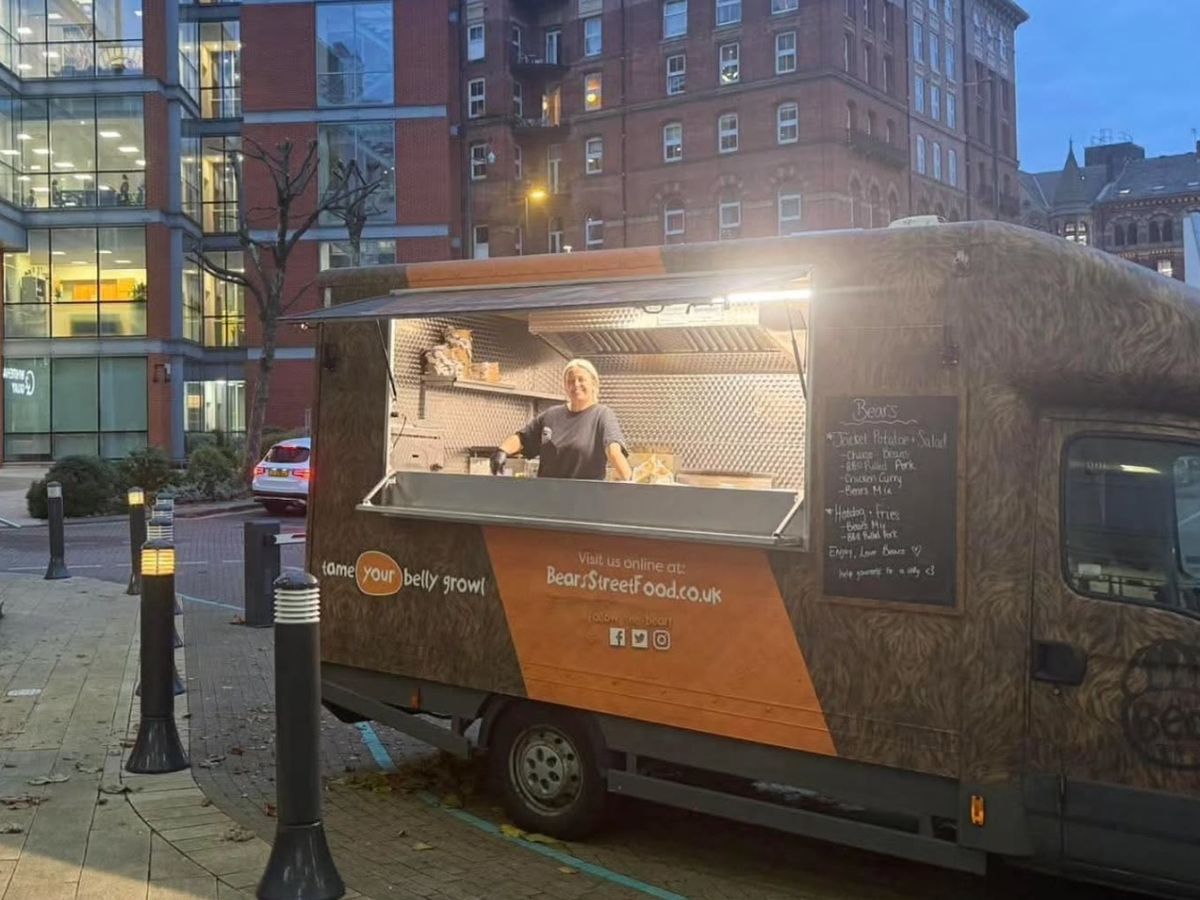
As close to the main staff entrance as your site allows, in a pedestrian area away from vehicle movements. A January launch means starting in the coldest, darkest part of the year, so a short walk and somewhere sheltered to eat make a real difference to take-up.
Check the position in winter conditions before committing. A spot that seems ideal in October may feel exposed in January. Lighting matters too if service runs early or late. For more on keeping footfall up in the darker months, see keeping lunchtime footfall up after the clocks go back.
Do you need any building work or equipment?
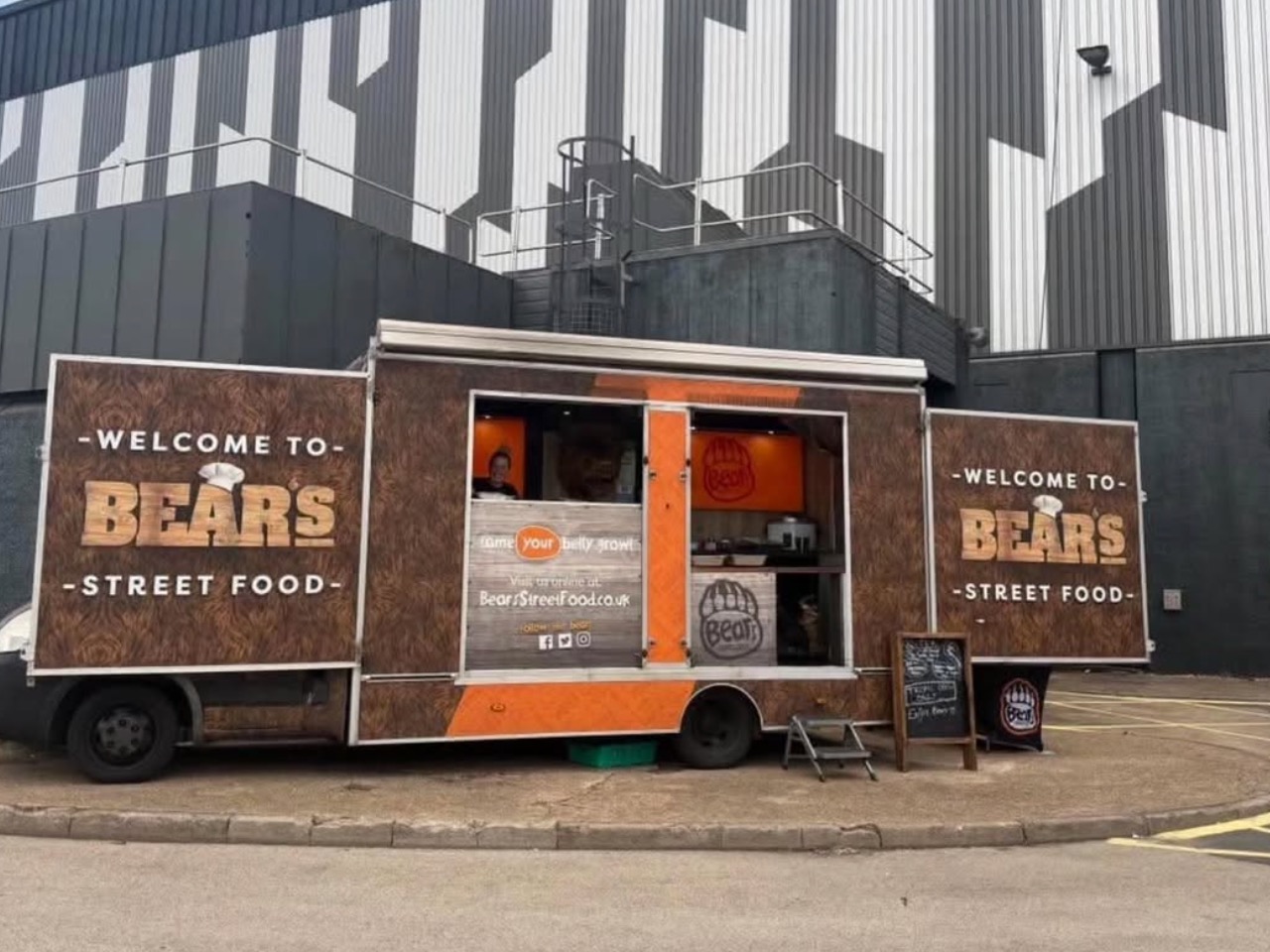
No. A self-sufficient mobile canteen brings its own kitchen, silent power and fresh water. There’s no need for a fixed kitchen, drainage, extraction or new utility connections, and no capital expenditure for the host.
What you do need is a suitable space for the unit and agreement from anyone else with a say over the site, such as a landlord or shared site management. Your facilities team will also want the caterer’s risk assessment and method statement (RAMS) and insurance documents, which Bear’s provides as standard.
How do you get staff using it from day one?
Tell them it’s coming before they break up for Christmas. A short announcement in December, with the start date, service times and a taste of the menu, gives people something to look forward to and stops the first week being quiet while word spreads.
Then gather feedback in the first few weeks. Ask what people like, what’s missing and whether the timings work. Small changes early on make a big difference to whether the service becomes part of the routine.
How much does a new workplace canteen cost the business?
On a zero-subsidy model, very little. The caterer covers its costs through sales to staff, and the business provides the space and access. There’s no kitchen to run and no equipment to buy.
The factors that shape the service itself are headcount, frequency, service hours and the number of units needed. Our guide to what affects the cost of workplace canteen catering goes through them in detail. If you’re replacing an existing provider, our guide to reviewing or switching your contract caterer covers the handover.
What does the timeline look like?
A realistic plan for a January start runs like this:
- October and November: agree frequency, headcount and budget, and share a brief with the caterer
- November: site visit to agree the unit’s position and access
- Early December: confirm start date, service times and menu, and receive RAMS and insurance documents
- Mid-December: announce the new service to staff before the Christmas break
- First week of January: service starts, with a feedback check after two or three weeks
Start planning your 2027 canteen
If you want a new canteen service running from January, now is the time to start. We’ll visit your site, talk through your headcount and shifts, and have everything ready for the new year.
Contact Bear’s Street Food to plan your workplace canteen for 2027.