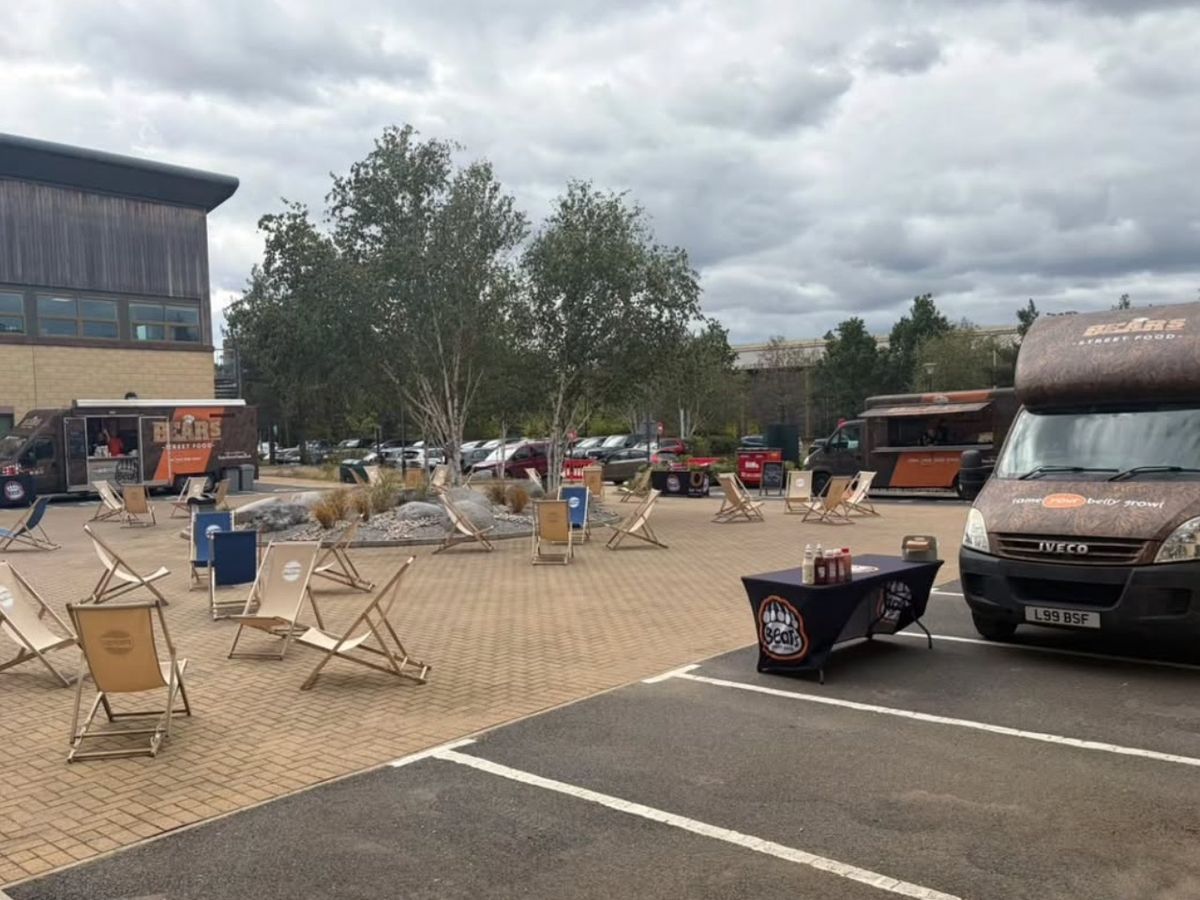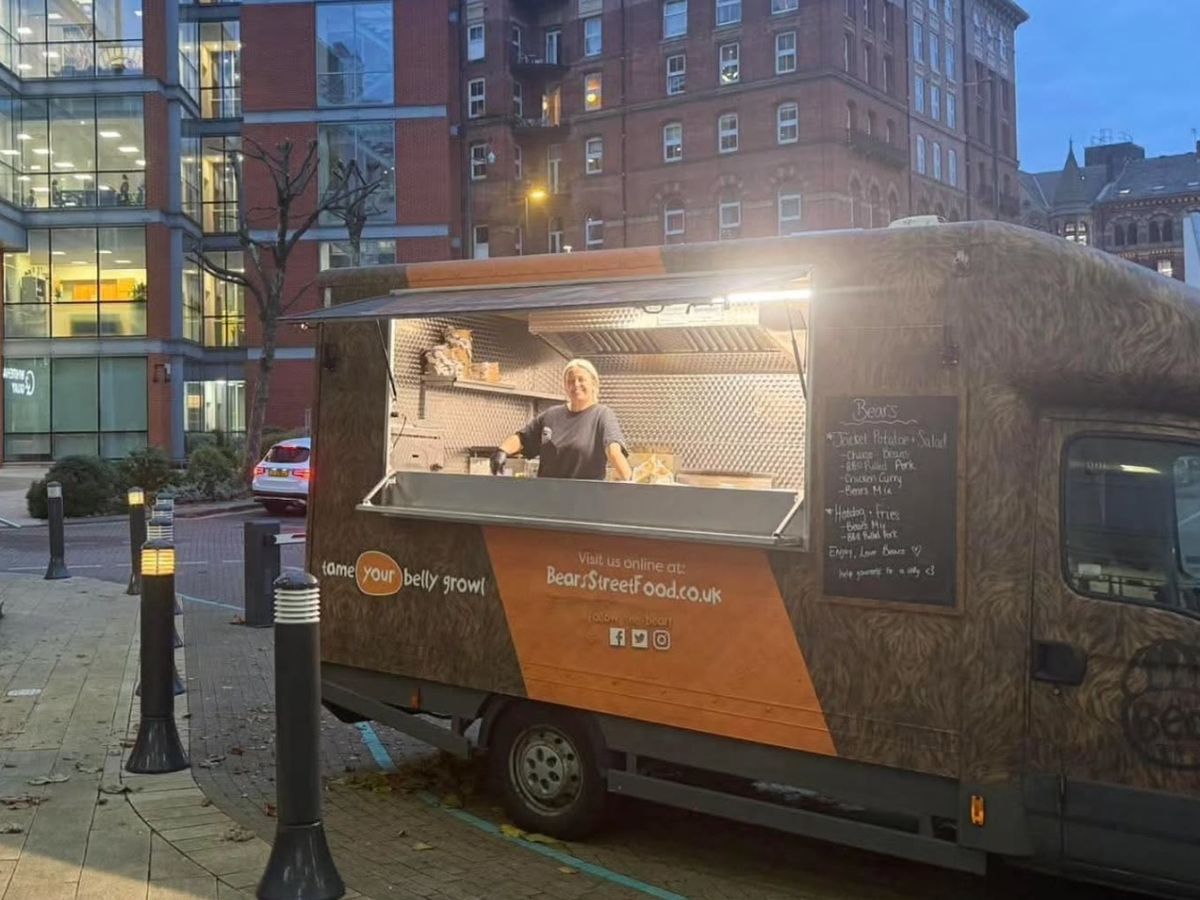
Winter-proofing a mobile canteen is mostly about the space around the unit, not the unit itself. Choose a sheltered, well-lit pitch, keep walkways clear of ice and standing water, and plan service so staff spend as little time queuing in the cold as possible. Get those basics right and lunch keeps running whatever the weather.
For facilities managers running an outdoor service through December, January and February, the planning starts now. Bear’s workplace canteen catering units are self-contained, so the questions below focus on your site: where the unit stands, how people reach it and what happens when the weather turns.
Where should a mobile canteen stand in winter?
Pick the most sheltered spot that still has safe vehicle access. A position in the lee of a building, away from the wind tunnels that form between blocks, makes a real difference to how long people will stand outside.
If the site offers several possible spots, stand in each at lunchtime on a cold, windy day before deciding; the difference is obvious within minutes.
Avoid low points where rain collects or frost lingers. The ground needs to be firm and level all year, not just in dry spells, so if your summer pitch was on grass or loose surfacing, review it with your caterer before the worst of the weather arrives.
Does winter weather affect the unit’s power and water?
Not in the way it would affect a site-connected kitchen. Bear’s units bring their own silent power and fresh water, so service doesn’t depend on your building’s utilities or on external hook-ups. That independence is one reason a mobile canteen keeps operating in car parks, loading bays and outdoor zones through the colder months. Your job is to keep the area around the unit safe.
How do you keep queues short when it’s cold?
Spread demand and keep the menu focused. Nobody wants to wait in January, and a long queue in the rain quickly erodes the goodwill a hot lunch creates.
Staggering break times by team, shift or floor smooths the peak. High-volume service helps as well, and Bear’s set-ups are built to serve hundreds of staff within strict break windows. Clear signage helps on dark days too, so people can find the unit without wandering across a wet car park. Darker lunchtimes since the clocks changed add another factor, which we covered in our post on the clocks going back and canteen lunchtimes.
What should facilities teams check before the weather turns?
A short walk-round with your caterer covers most of it. Check:
- the route from building to unit, including steps, kerbs and drainage
- who grits or clears the pitch and walkways, and when
- lighting for early-evening and night-shift service
- where people wait, and whether existing canopies or covered areas can be used
- vehicle access if snow or ice closes part of the site
- the plan if severe weather means pausing service
Most of these sit with your site team rather than the caterer, so agree responsibilities in writing. If you want seating or shelter beyond what the site already has, raise it early and ask your caterer what’s possible.
What happens on days when the weather is severe?
Agree the plan before you need it. Heavy snow, ice or high winds can make the pitch or walkway unsafe even when the unit itself could operate. Decide in advance who makes the call on the day, how staff will be told and whether service moves, shortens or pauses.
A short written note covering these points saves a flurry of phone calls on the first frosty morning. It also helps your caterer plan staffing and stock, because they know how and when a change will reach them. For sites on 24/7 rotas, make sure the decision process works at night as well as during office hours.
Should the menu change for winter?
Usually, yes. Warm, filling food does more for morale in January than in June. Slow-cooked pulled meats, curry and flame-grilled burgers all suit the season, and hot food that’s quick to hand over keeps the line moving. Variety still matters through a long winter, since a menu that changes week to week stops the appeal of hot food wearing thin by February. If you started moving away from lighter dishes in the autumn, our guide to shifting your canteen from summer salads to warm comfort food covers that transition.
How does winter affect night and weekend shifts?
Night shifts feel the cold most, and they’re often the teams with the fewest food options on site. Bear’s 24/7 shift support means service can be timed to night and weekend rotas rather than just the daytime peak.
Lighting and safe access matter even more after dark. Our post on winter night-shift canteen catering looks at night cover in more depth.
Does winter catering cost the host more?
Under Bear’s zero-subsidy model, the host carries no catering subsidy and no capital spend on fixed kitchen facilities, whatever the season. Winter can still add to your own site costs, such as gritting, lighting or temporary cover, so budget for that work separately. Seasonal staffing changes are easier to manage when your caterer can scale units or service frequency to match.
Want your canteen to run smoothly all winter?
Talk to us about site set-up and service times for the months ahead. Get in touch with Bear’s.